
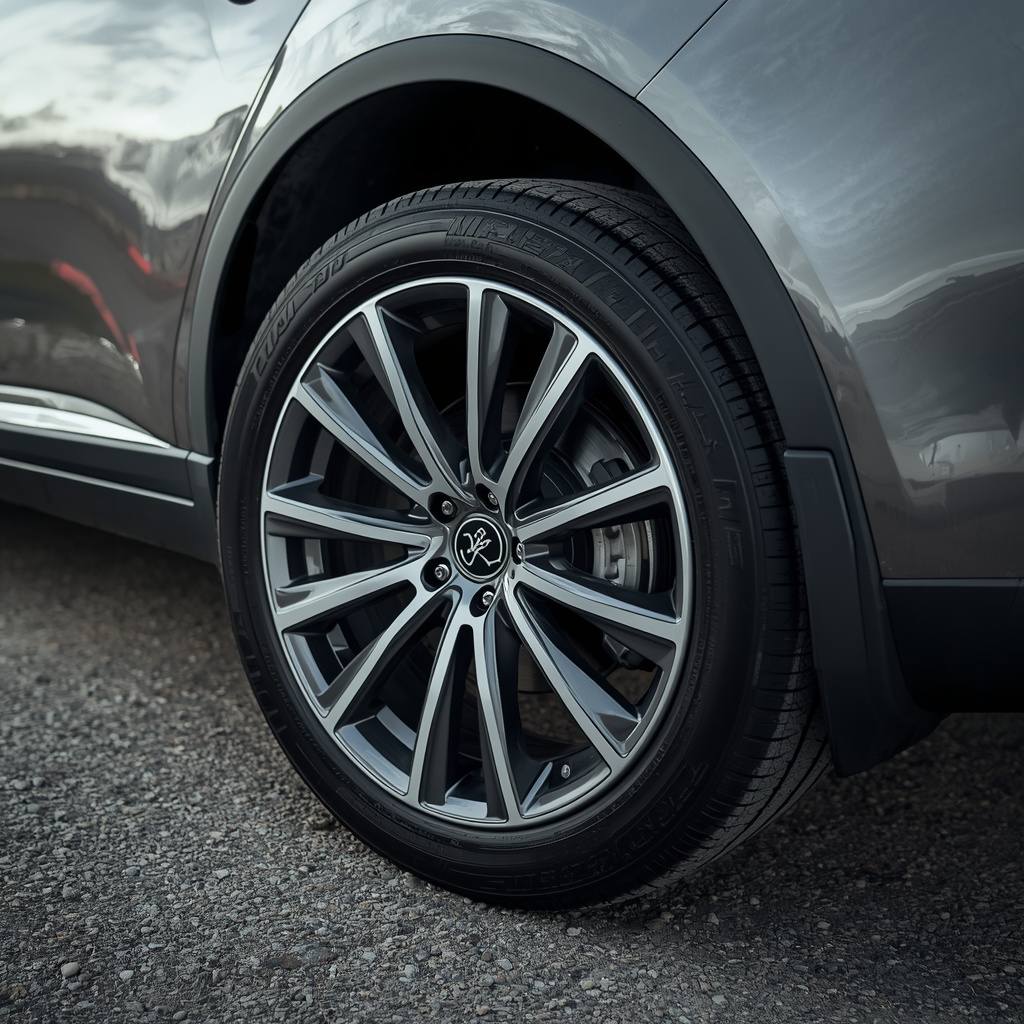
How much does a car tire weigh? A typical passenger car tire weighs about 15 to 25 pounds on its own, without the wheel. Larger tires for crossovers and SUVs often weigh 25 to 50 pounds, and light truck tires commonly run 45 to 80 pounds or more. Once you mount the tire on a wheel, a typical car assembly weighs roughly 35 to 55 pounds per corner.
Average Tire Weight by Vehicle Type
| Vehicle Type | Typical Tire Weight (tire only) |
|---|---|
| Small or compact car | 15–20 lb |
| Midsize or full-size sedan | 20–25 lb |
| Crossover or SUV | 25–50 lb |
| Light truck or pickup | 45–80+ lb |
These are general ranges. For an exact figure, check the tire manufacturer’s spec sheet, which usually lists the weight for each size.
What Makes Some Tires Heavier
- Size: wider tires and larger diameters use more rubber and steel.
- Load rating: light truck (LT) tires with higher load ranges have more plies and tougher internal construction.
- Tread type: all-terrain and mud-terrain tires have deeper, chunkier tread than highway tires.
- Run-flat design: run-flat tires have reinforced sidewalls that add weight.
- Wear: a tire loses a few pounds of rubber over its life, so a worn tire weighs less than a new one, and uneven wear like tire feathering removes rubber faster in some spots.
Tire Weight vs Tire and Wheel Weight
Most “tire weight” questions are really about the whole wheel and tire assembly, since that’s what you lift when changing a flat. The wheel adds a lot. A typical 18-inch cast alloy wheel weighs about 20 to 26 pounds on its own, while steel wheels are usually heavier. That’s why a mounted car tire often weighs 35 to 55 pounds, and a truck assembly can top 80 to 100 pounds.
Why Tire Weight Matters
Tires are unsprung, rotating weight, so heavier tires take more energy to spin up and slow down. That can slightly reduce fuel economy, acceleration, and ride comfort. If you’re upgrading to bigger or wider tires, the extra weight is part of the trade-off. Our guide on how long tires last covers how size and tread type also affect lifespan.
Weight also matters for safety when you handle tires yourself. Lift with your legs, and roll tires rather than carrying them when you can. After any wheel is reinstalled, tighten the lug nuts to spec in a star pattern. Then set the pressure to the figure on your door jamb sticker, and if a tire is overinflated, here’s how to let air out of a tire. Regular tire rotations keep all four wearing evenly.
Conclusion
So, how much does a car tire weigh? Most passenger car tires weigh 15 to 25 pounds, SUV tires 25 to 50 pounds, and light truck tires 45 to 80 pounds or more. Mount one on a wheel and you’re typically lifting 35 to 55 pounds for a car. Check the manufacturer’s spec sheet for exact numbers, especially if you’re comparing tires for performance or fuel economy.
Frequently Asked Questions
How much does a car tire weigh with the rim?
A typical passenger car tire and wheel together weigh about 35 to 55 pounds, depending on the wheel size and whether it’s alloy or steel.
How much does a spare tire weigh?
A compact temporary spare, or donut, with its wheel usually weighs about 25 to 35 pounds, which is lighter than a full-size spare.
Do heavier tires lower gas mileage?
Slightly. Heavier tires add rotating mass and often have more rolling resistance, which can reduce fuel economy a little compared to lighter tires of the same size.
How much does a semi-truck tire weigh?
Commercial truck tires are far heavier than car tires, commonly weighing about 100 to 250 pounds depending on size and construction.