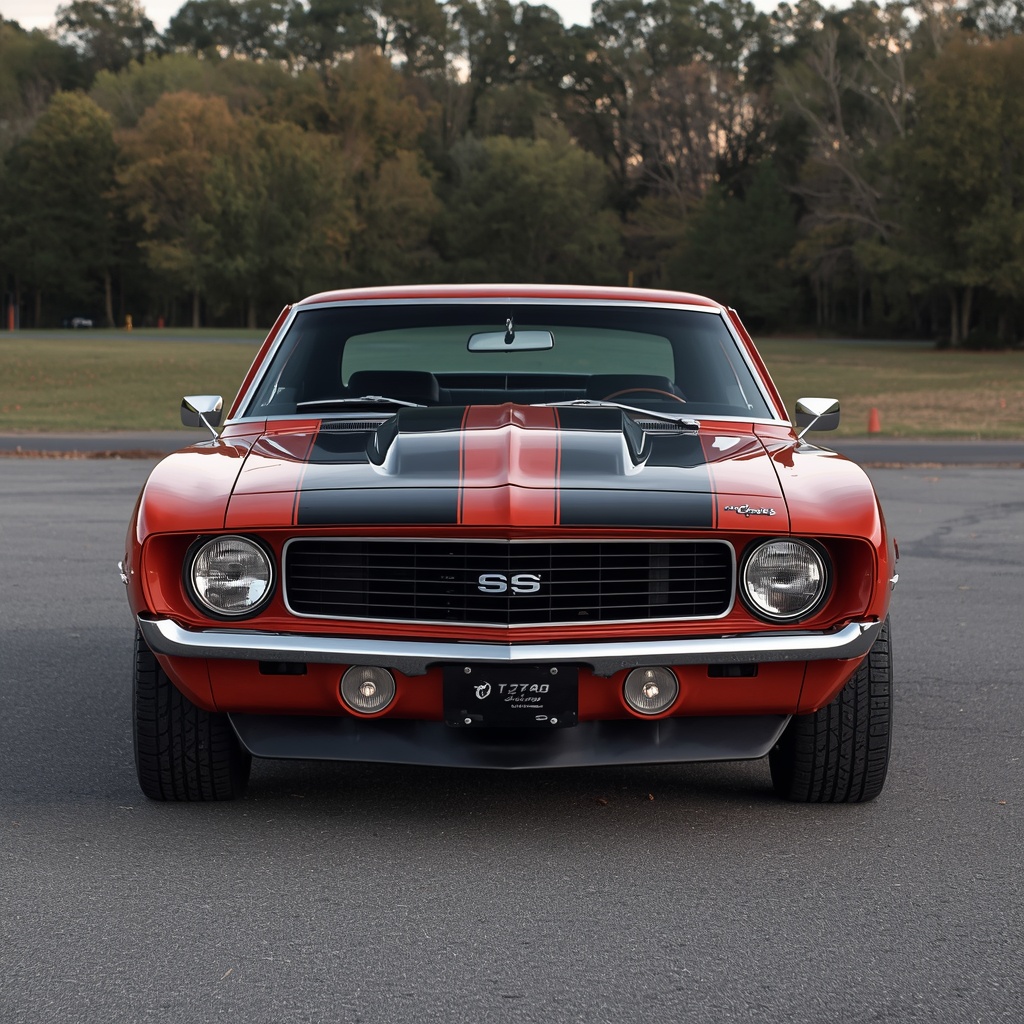
Quick Answer: The spark plug gap 1969 Chevrolet Camaro engines call for is 0.035 inches (35 thousandths), the factory setting Chevrolet specified across every engine available that year — the inline-six, 307, 327, 350, and 396 — since all of them left the factory running the same point-type ignition system.
Spark Plug Gap 1969 Chevrolet Camaro Specs by Engine
| Engine Option | Displacement | Ignition System | Factory Spark Plug Gap |
|---|---|---|---|
| 230 / 250 inline-6 | 3.8L / 4.1L | Point-type | 0.035″ |
| 307 V8 | 5.0L | Point-type | 0.035″ |
| 302 V8 (Z/28) | 4.9L | Point-type | 0.035″ |
| 327 V8 | 5.4L | Point-type | 0.035″ |
| 350 V8 (L48/L65) | 5.7L | Point-type | 0.035″ |
| 396 V8 (L35/L34/L78) | 6.5L | Point-type | 0.035″ |
Why Every Engine Uses the Same Gap
It’s not a coincidence that every 1969 Camaro engine shares a spec — the gap is tied to the ignition system, not the displacement. Every 1969 GM vehicle used a single-point breaker distributor (GM’s HEI system wasn’t introduced until 1975), so 0.035″ was the universal factory tune-up spec across the entire lineup that year, six-cylinder or big-block.
What Happens If the Gap Is Off
Too narrow (under roughly 0.030″) and the spark weakens, making cold starts harder and idle fouling more likely. Too wide on the stock point-and-condenser system, and the coil can struggle to fire reliably at higher RPM, leading to a misfire under load. If you’ve since converted to electronic ignition, a common upgrade on these cars, that’s a different story: aftermarket systems like MSD often call for a wider gap, typically 0.040″–0.045″, so the factory 0.035″ spec no longer applies once you’ve made that swap.
Setting the Gap Correctly
When setting the spark plug gap 1969 Chevrolet Camaro engines need, use a wire-type (round-wire) gap gauge rather than a flat feeler gauge; it seats against the curved ground electrode more accurately. Adjust by bending the ground electrode only, never the center electrode, and recheck the gap any time you drop a plug, since the ground strap bends easily. If you’re also weighing whether to replace your ignition coils along with your spark plugs, it’s worth doing both at once while everything’s already apart.
A Few Real-World Scenarios
- Rebuilding a numbers-matching 396 SS? Keep it at 0.035″ to stay period-correct, even though a modern coil could handle more.
- Fresh AC-Delco plugs out of the box? Check the gap anyway; factory pre-set gaps can shift slightly in shipping and handling.
- Converted to an MSD box or HEI swap? The 0.035″ spec no longer applies. Follow your ignition manufacturer’s recommended gap instead, usually wider.
Worth knowing too: a spark plug running out of gap can produce symptoms that mimic other issues, like your car jerking when accelerating or shaking under acceleration, so it’s worth ruling out before chasing a bigger problem.
Conclusion
Whether you’re running the base inline-six or a numbers-matching 396, the factory spark plug gap 1969 Chevrolet Camaro engines share is 0.035 inches across the board, a direct result of every engine sharing the same point-type ignition that year. The only reason to deviate from that number is a genuine ignition upgrade, in which case your new system’s spec takes over.
Frequently Asked Questions
Does the spark plug gap change between the 307, 350, and 396 engines?
No, 0.035″ is specified across all point-ignition V8s and the inline-six, since the gap is set by the ignition system, not the engine displacement.
What if I’ve converted my ’69 Camaro to electronic ignition?
Then the factory 0.035″ spec no longer applies. Check your ignition manufacturer’s recommendation; MSD and similar systems often call for 0.040″ to 0.045″.
What tool should I use to check spark plug gap?
A wire-type (round-wire) gap gauge is more accurate for this than a flat feeler gauge, since it seats better against the curved ground electrode.
Can a too-wide gap damage anything on a stock ignition?
It can cause misfires and put extra strain on the coil and points, but it won’t typically cause permanent damage on its own; it’s more a driveability issue.
Do new spark plugs come pre-gapped correctly?
Not always. Even factory-new plugs should be checked and adjusted with a gap gauge before installation.
Is the gap the same for the six-cylinder Camaro?
Yes, the six-cylinder used the same point-ignition system as the V8s that year, so it takes the same 0.035″ gap.