
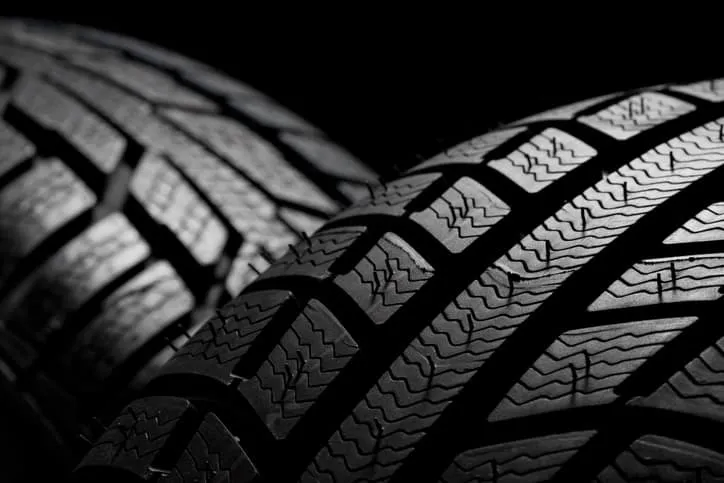
Have you ever wondered why tires are always black? It is not just a random choice but a well-thought-out decision by tire manufacturers, and the real story behind it goes back over a century. In fact, if you’re choosing tires for extreme weather, such as those in hot climates, understanding the tire’s material and color can help — see our guide on the 5 Best Tires for Hot Climates.
Let’s dig into why tires are black, starting with a surprising bit of history: they weren’t always this color.
Tires Weren’t Always Black
Natural rubber is actually an off-white color, and the earliest car tires, including those on the original Ford Model T, reflected that. Early manufacturers added zinc oxide, a white powder, to strengthen the rubber, which kept tires pale. Around 1917, tire makers began adding carbon black instead, after discovering it made the rubber dramatically more durable. Zinc oxide also became scarce during World War I, since zinc was needed for brass munitions, which pushed the switch to carbon black even further. The color change wasn’t the goal; it was a side effect of a genuine engineering breakthrough.
As a fun footnote, some manufacturers initially only applied carbon black to the tread to save on cost, leaving the sidewalls their original pale color. That’s actually where whitewall tires came from, a look that’s still popular with classic car collectors today.
The Real Reason: Carbon Black Is a Reinforcing Agent
Carbon black is a powder made from the incomplete combustion of oil or natural gas, and it’s the primary reason tires are black. But the color is really a side effect. Carbon black’s main job is reinforcing the rubber compound, dramatically increasing its tensile strength and resistance to abrasion. Early adopters found it delivered roughly a tenfold increase in tire wear resistance compared to rubber without it, which is why it became, and remains, a standard ingredient in tire manufacturing. It also helps conduct heat away from the tire, which supports tire life under the stress of daily driving.
Carbon Black Also Protects Against UV and Ozone Cracking
Carbon black also helps protect tires from sun exposure, which can otherwise cause rubber to become brittle and crack over time. This kind of environmental degradation, caused by a combination of UV light and atmospheric ozone attacking the rubber’s molecular structure, is known as ozone cracking. Carbon black particles help absorb and block UV rays, slowing this process and extending the tire’s usable life.
It Also Helps Hide Dirt and Grime
Another practical upside is that black hides the dirt and grime that accumulates while driving. If tires were any other color, especially something lighter, they’d show road dirt and staining far more obviously. Keeping them black means you don’t have to worry nearly as much about keeping them looking clean, which is a small but real convenience for most drivers.
Does Carbon Black Improve Grip?
Carbon black does play a role in a tire’s overall performance, including grip, but it’s more nuanced than simply “more carbon black equals more traction.” The type, amount, and blend of carbon black (often combined with silica in modern tire compounds) affects how the rubber compound behaves: its hardness, its flexibility, and how it wears. Tire engineers balance these ingredients along with tread design to tune grip, rolling resistance, and durability for a specific tire’s purpose, whether that’s a daily commuter tire or a high-performance summer tire, and it’s part of why tire lifespan varies so much between models. So carbon black is part of the grip equation, but it’s the whole compound and tread design working together, not carbon black alone.
Conclusion
Tires are black because of carbon black, a reinforcing powder that dramatically improves durability and wear resistance, a discovery tire makers made over a century ago after starting out with pale, zinc-oxide-reinforced rubber. It also happens to protect against UV and ozone damage, hide road grime, and play a role in how the tire compound performs, including grip.
So the next time someone asks you, “why are tires black?” you’ll have more than just the simple answer, you’ll have the actual story behind it.
Frequently Asked Questions
Yes. Natural rubber is off-white, and early tires (like those on the original Ford Model T) were pale, reinforced with zinc oxide rather than carbon black. Tires switched to black around 1917.
Carbon black turned out to reinforce rubber far more effectively, delivering roughly a tenfold increase in wear resistance. Zinc also became scarce during World War I since it was needed for brass munitions, accelerating the switch.
Whitewall tires trace back to manufacturers only applying carbon black to the tread to save on cost, leaving the sidewalls their original pale color. It’s now a stylistic choice popular with classic car collectors.
Yes, that’s actually its primary purpose. Carbon black reinforces the rubber compound, significantly increasing tensile strength and resistance to abrasion, which is why it became a standard tire ingredient.
Black does absorb more heat than lighter colors, but carbon black also helps conduct that heat away from the tire, and its UV-blocking properties help offset the added heat exposure, so the net effect is more durability than damage.