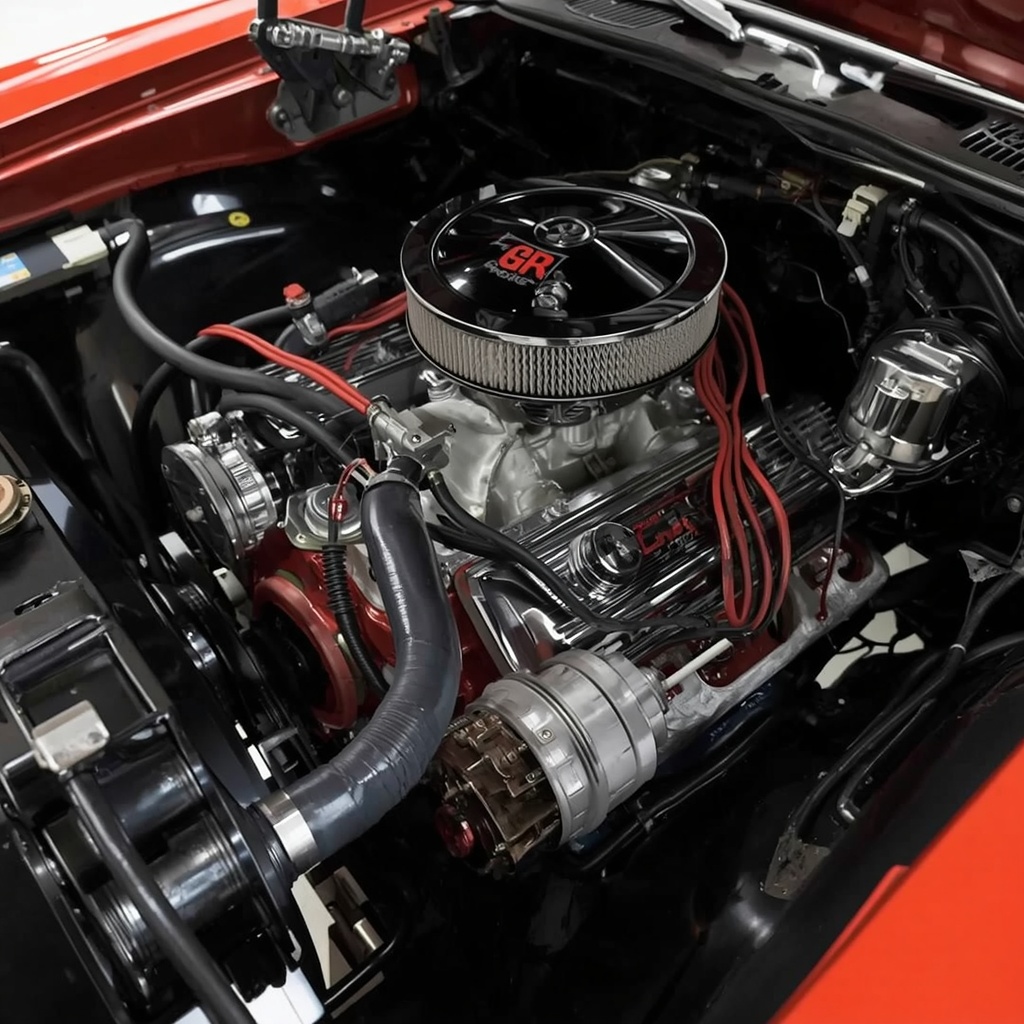
Quick Answer: The spark plug gap 1970 Chevrolet Chevelle engines call for is 0.035 inches (35 thousandths), the factory setting across every engine available that year, including the 350, 396 (badged 396 but actually 402 cubic inches that year), and the new-for-1970 454, since all of them used the same point-type ignition. HEI wasn’t introduced until 1975.
Spark Plug Gap 1970 Chevrolet Chevelle Specs by Engine
| Engine Option | Displacement | Ignition System | Factory Spark Plug Gap |
|---|---|---|---|
| 250 inline-6 | 4.1L | Point-type | 0.035″ |
| 307 V8 | 5.0L | Point-type | 0.035″ |
| 350 V8 (L48/LS3/LS5-related variants) | 5.7L | Point-type | 0.035″ |
| 396 V8 (badged 396, actually 402ci) | 6.6L | Point-type | 0.035″ |
| 454 V8 (LS5/LS6) | 7.4L | Point-type | 0.035″ |
Why Every Engine Uses the Same Gap
As with the rest of GM’s 1970 lineup, the Chevelle’s spark plug gap is tied to the ignition system rather than engine displacement. Every 1970 Chevelle, whether it left the factory with the base six-cylinder or the LS6 454, used a single-point breaker distributor, since GM didn’t introduce High Energy Ignition (HEI) until the 1975 model year. That’s why 0.035″ applies uniformly across the entire 1970 engine lineup, big-block or small.
If You’ve Upgraded to HEI
Converting a points-based Chevelle to an HEI distributor is one of the most common upgrades on these cars, and it changes the gap spec. HEI’s higher-output coil can reliably jump a wider gap, and most HEI conversions run 0.045″, sometimes wider on a strong aftermarket coil. If you’re not sure which ignition your Chevelle currently has, HEI distributors have the coil built into the distributor cap itself (a noticeably larger cap), while point-type distributors use a separate can-style coil mounted elsewhere in the engine bay.
Setting the Gap Correctly
When setting the spark plug gap 1970 Chevrolet Chevelle engines need, use a wire-type (round-wire) gap gauge rather than a flat feeler gauge, since it seats more accurately against the curved ground electrode. Adjust by bending the ground electrode only, and recheck the gap any time a plug is dropped, since the ground strap bends easily on impact.
A Few Real-World Scenarios
- Restoring a numbers-matching LS6 454? Keep it at 0.035″ to stay period-correct with the original points ignition.
- Daily-driving a small-block 350 with the original points setup? 0.035″ remains correct until you change the ignition system itself.
- Already converted to HEI? Regap to 0.045″ as a starting point, and check your specific distributor and coil manufacturer’s recommendation.
A gap that’s drifted out of spec can also produce symptoms that look like other problems, including your car jerking when accelerating or shaking under acceleration, so it’s a cheap thing to rule out before assuming something more expensive is wrong.
Conclusion
Whether your 1970 Chevelle rolled off the line with the base six or the LS6 454, the factory spark plug gap 1970 Chevrolet Chevelle engines share is 0.035 inches across the board, a direct result of every engine sharing the same point-type ignition that year. The only reason to run a different number is a genuine ignition upgrade like HEI, in which case the new system’s spec, typically 0.045″, takes over.
Frequently Asked Questions
Does the spark plug gap change between the 350, 396, and 454 Chevelle engines?
No, 0.035″ applies across all of them for 1970, since the gap is determined by the point-type ignition system every engine shared that year, not the displacement.
What gap should I use if I’ve converted my Chevelle to HEI?
Most HEI conversions run 0.045″ as a starting point, since HEI’s higher-output coil can reliably fire a wider gap than the original point system.
How can I tell if my Chevelle has points or HEI?
HEI distributors have the ignition coil built into a noticeably larger distributor cap. Point-type distributors use a separate can-style coil mounted elsewhere in the engine bay.
What tool should I use to check spark plug gap?
A wire-type (round-wire) gap gauge is more accurate than a flat feeler gauge for this, since it seats better against the curved ground electrode.
Is the gap the same for the base six-cylinder Chevelle?
Yes, the six-cylinder used the same point-type ignition as the V8s that year, so it takes the same 0.035″ gap.