How long can you drive with a bad wheel bearing? It depends on how far gone it is. A bearing that has just started to hum may last a while, sometimes weeks, but there’s no reliable way to predict when it will get worse. Once you hear grinding, feel looseness in the wheel, or notice the noise getting louder, it’s time to stop putting it off. A wheel bearing that fails completely can make the wheel wobble or even seize, which is a serious safety risk at speed.
What a Wheel Bearing Does
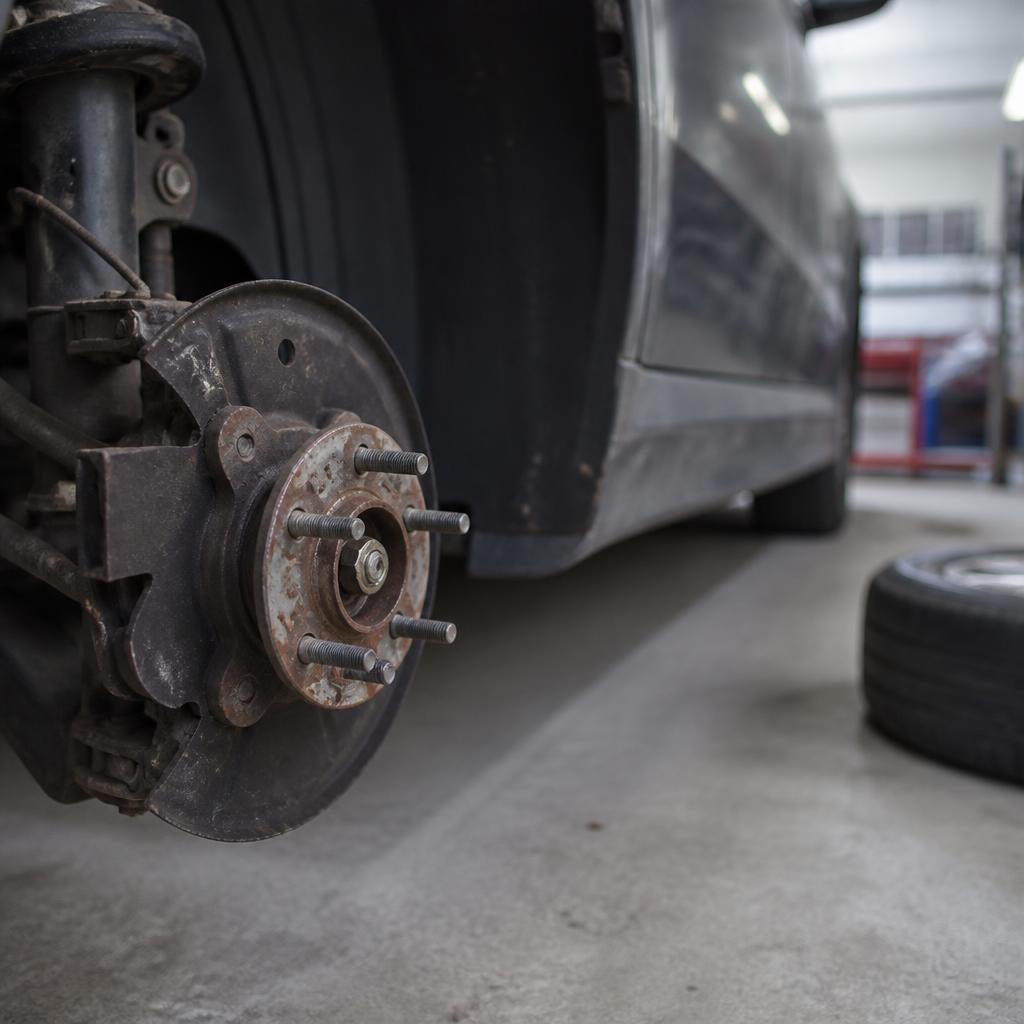
Wheel bearings are sets of steel balls or rollers inside a sealed hub. They let each wheel spin smoothly with very little friction while supporting the vehicle’s weight. Over time, water, dirt, potholes, and normal wear can break down the bearing’s grease and damage its surfaces. Once that starts, friction and heat increase, and the bearing wears faster and faster.
Signs of a Bad Wheel Bearing
- Humming or growling noise: often louder at higher speeds and changing pitch when you turn. Our guide on what that humming noise is helps you tell a bearing from tire noise.
- Grinding: a rougher, metallic sound that usually means the bearing is badly worn.
- Vibration: a shake felt in the steering wheel or floor that gets worse with speed.
- Loose wheel: play or wobble when the wheel is rocked by hand with the car raised.
- ABS warning light: on many cars the wheel speed sensor is built into the hub, so a failing bearing can trigger it.
- Uneven tire wear: a loose bearing can let the wheel shift and wear the tire unevenly.
How Long Is Too Long?
A faint hum with no vibration or looseness is an early warning. Most mechanics would say get it looked at soon and avoid long highway trips until it’s replaced. Grinding, clicking, a wheel you can feel moving, or heat coming from the wheel area all mean the bearing is close to failure. At that stage, drive only as far as necessary to reach a shop, at reduced speed, or have the car towed.
Bearing noise can be easy to confuse with other problems. Worn or feathered tires can hum, and metal-on-metal sounds when you stop may point to the brakes instead. If the grinding happens mainly when you press the pedal, read how long you can drive with grinding brakes.
What Happens If You Ignore It
A worn bearing doesn’t just get louder. It can damage the hub, the CV joint on front-wheel-drive cars, the ABS sensor, and your tires. In the worst case, the bearing can overheat and seize, locking the wheel, or come apart enough that the wheel wobbles dangerously. Replacing a bearing early is far cheaper than dealing with that kind of failure. If you’re also feeling general shaking on the road, see why your car is shaking.
Conclusion
So, how long can you drive with a bad wheel bearing? An early hum may give you some time, but it’s unpredictable, and grinding, looseness, or vibration mean the bearing needs replacing now. Get it diagnosed at the first sign of noise, avoid long or fast drives until it’s fixed, and have the car towed if the wheel feels loose or the noise turns into grinding.
Frequently Asked Questions
How do I know which wheel bearing is bad?
The noise often changes when you turn. If it gets louder turning one way, the load is shifting onto the bearing on the opposite side. A mechanic can confirm by checking for play and spinning each wheel by hand.
Can a bad wheel bearing cause a wheel to fall off?
In extreme cases of neglect, a completely failed bearing can allow the wheel to separate or seize. That’s rare, but it’s why grinding or looseness should never be ignored.
How much does it cost to replace a wheel bearing?
Costs vary by vehicle and whether the bearing is a press-in type or a bolt-on hub assembly, but many replacements fall in the range of a few hundred dollars per wheel.
Should I replace wheel bearings in pairs?
It’s not required, but because both sides have similar mileage, some owners replace them in pairs to avoid a second repair soon after.