How long can you drive with low transmission fluid? As little as possible. Transmission fluid lubricates and cools the gears and clutches, and in an automatic it also creates the hydraulic pressure that makes the transmission shift. If it’s only slightly low, you may get by for a short drive to a shop. But driving for days or weeks on low fluid can overheat the transmission and cause damage that costs thousands to repair, compared with the few dollars a top-off costs.
Why Low Transmission Fluid Is a Big Deal
Unlike engine oil, transmission fluid isn’t supposed to be used up between services. If the level is low, there’s almost always a leak somewhere, from a pan gasket, a cooler line, an axle seal, or the torque converter seal. With less fluid circulating, the transmission runs hotter, clutch packs can slip and glaze, and seals harden. Heat is the leading killer of automatic transmissions, and low fluid speeds it up.
Signs Your Transmission Fluid Is Low
- Delayed or harsh shifts: a pause before the car engages Drive or Reverse, or clunky gear changes.
- Slipping: the engine revs up but the car doesn’t accelerate as it should.
- Jerking or shuddering: uneven power delivery while accelerating. See why your car jerks when accelerating for other causes.
- Red or brown spots under the car: automatic transmission fluid is usually red when fresh.
- Burning smell or a transmission temperature warning: signs the fluid is overheating.
- Whining or humming: noise that changes with gear or speed.
How Long Is Too Long?
If you catch it early, with the level just below the full mark and no symptoms, it’s usually safe to drive gently to a shop or parts store and top it off the same day. Once you notice slipping, delayed engagement, or a burning smell, damage may already be happening, so keep driving to a minimum. If the transmission won’t engage at all or the warning light comes on, stop and have the car towed rather than risk destroying the transmission.
How to Check and Top Off the Fluid
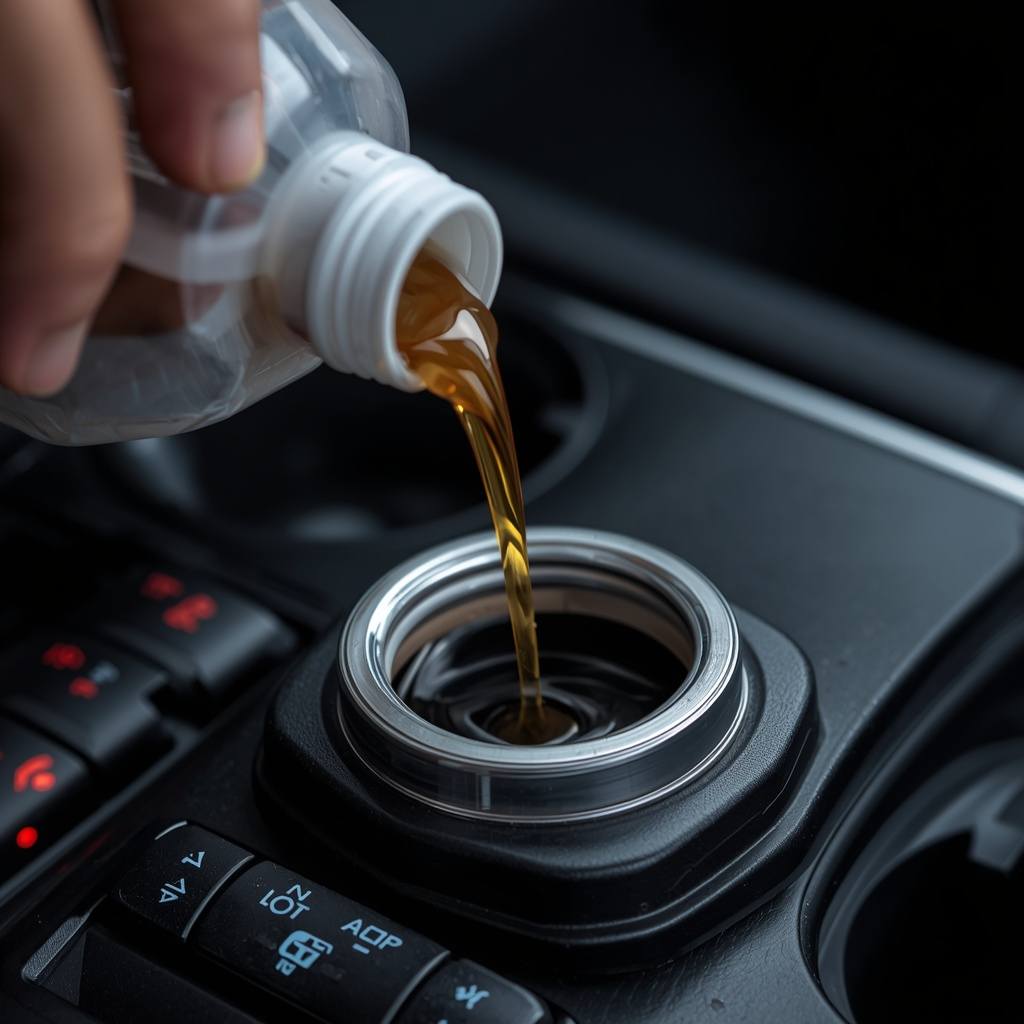
Many vehicles still have a transmission dipstick, but the correct checking procedure differs from engine oil. Some cars are checked hot with the engine running in Park or Neutral, and others need specific steps. Our guide on how to check transmission fluid walks through it. Many newer cars have sealed transmissions with no dipstick, and those need a shop to check the level. Always use the exact fluid type in your owner’s manual, since the wrong fluid can cause shifting problems.
Remember that topping off is a temporary fix. Because low fluid means a leak, have the source found and repaired. If shifting problems continue after the level is corrected, some vehicles also benefit from a computer relearn. Chevy owners, for example, can see how to reset the transmission control module.
Conclusion
So, how long can you drive with low transmission fluid? Only long enough to get it topped off and checked. Slightly low fluid with no symptoms gives you a little time, but slipping, harsh shifts, or a burning smell mean damage is already underway. Check the level regularly, fix leaks promptly, and add transmission fluid to your car maintenance checklist.
Frequently Asked Questions
Can low transmission fluid damage my transmission?
Yes. Low fluid causes overheating, slipping, and poor lubrication, which can burn clutches and damage internal parts. Severe cases can require a rebuild or replacement.
How do I know if my transmission fluid is low without a dipstick?
Watch for symptoms like delayed engagement, slipping, or harsh shifts, and look for red fluid under the car. Sealed transmissions need a shop to check the level using the proper procedure.
Can I add transmission fluid myself?
On vehicles with a dipstick, yes. Use the exact fluid type listed in your owner’s manual, add a little at a time, and recheck the level to avoid overfilling.
Will topping off transmission fluid fix slipping?
If low fluid was the only issue and no damage has occurred, a top-off may restore normal shifting. If slipping continues, the transmission may already have internal wear and should be inspected.