If a humming noise disappears when turning left, the most likely cause is a worn wheel bearing on the left side of the car, usually the front. When you turn left, the car’s weight shifts to the right-side wheels and takes load off the left side. A bad left bearing gets quieter when it’s unloaded, so the hum fades in left turns and often gets louder in right turns. Cupped or unevenly worn tires can produce a similar sound, so it’s worth confirming before you buy parts.
Why Turning Changes the Hum
Wheel bearings make more noise when they carry more weight. In a turn, body roll and cornering force push weight onto the outside wheels. That means:
- Turning left loads the right-side bearings and unloads the left side.
- Turning right loads the left-side bearings and unloads the right side.
So if the humming noise disappears when turning left and gets louder turning right, the left side bearing is the likely suspect. If it’s the reverse, look at the right side. For a broader guide to these noises, see what that humming noise is.
Other Possible Causes
Uneven Tire Wear
Cupped, scalloped, or feathered tires can hum in a way that changes as weight shifts in turns. Run your hand across the tread in both directions. If it feels saw-toothed or uneven, the tires may be the source, and our guide on what causes tire feathering explains why it happens.
Rear Wheel Bearings
Rear bearings follow the same rule, but the sound is harder to place. A hum that seems to come from behind you points to the rear.
CV Joint or Differential
CV joints usually click rather than hum, and differential noise typically changes with acceleration and deceleration more than with turning. These are less likely if the hum responds clearly to steering direction.
How to Confirm a Bad Wheel Bearing
- Swerve test: on a safe, empty road, gently weave left and right at around 30 to 50 mph and note when the hum gets louder or quieter.
- Speed test: bearing hum rises with vehicle speed, not engine speed. Shift to neutral briefly; if the noise stays the same, it’s not the engine.
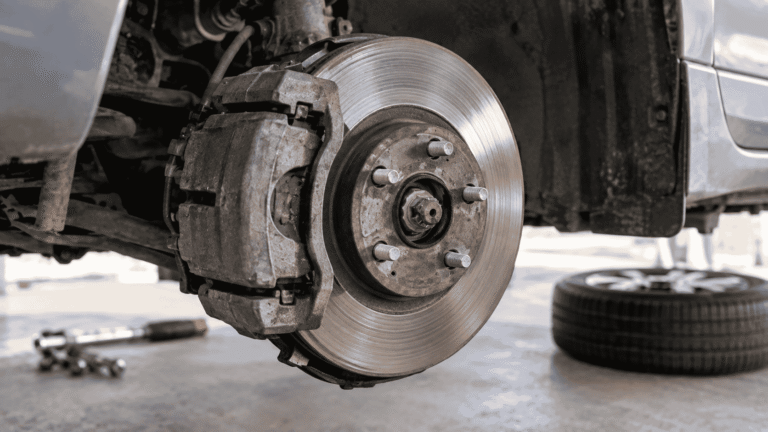
- Wheel play check: with the car safely raised and supported, grab the tire at 12 and 6 o’clock and rock it. Noticeable play suggests a worn bearing.
- Spin check: spin the wheel by hand and feel for roughness or grinding.
- Tire swap: rotating the tires can help rule out tire noise, since the sound would move with the tire.
Is It Safe to Keep Driving?
An early hum isn’t an emergency, but bearings only get worse. Once the noise turns into grinding, or the wheel feels loose, the bearing can overheat or fail. Read how long you can drive with a bad wheel bearing for warning signs. If you also feel vibration through the wheel, see why your steering wheel is shaking.
Conclusion
When a humming noise disappears when turning left, a worn left-side wheel bearing is the most likely cause, because left turns take weight off the left wheels. Rule out uneven tire wear, confirm with a swerve test and a wheel play check, and replace the bearing before the hum turns into grinding. Catching it early keeps the repair simple and avoids damage to the hub or CV joint.
Frequently Asked Questions
If the noise is louder when turning right, which bearing is bad?
Usually the left one. Turning right puts more weight on the left-side wheels, so a worn left bearing gets louder in right turns.
Can tires make a humming noise like a wheel bearing?
Yes. Cupped or unevenly worn tires can hum, and the sound may change in turns. Rotating the tires helps tell the difference, since tire noise moves with the tire.
Does wheel bearing noise change with speed?
Yes. Bearing hum usually gets louder as vehicle speed increases, regardless of engine RPM.
Should I replace wheel bearings in pairs?
It’s not required, but bearings on the same axle have similar mileage, so some owners replace both to avoid a second repair soon after.