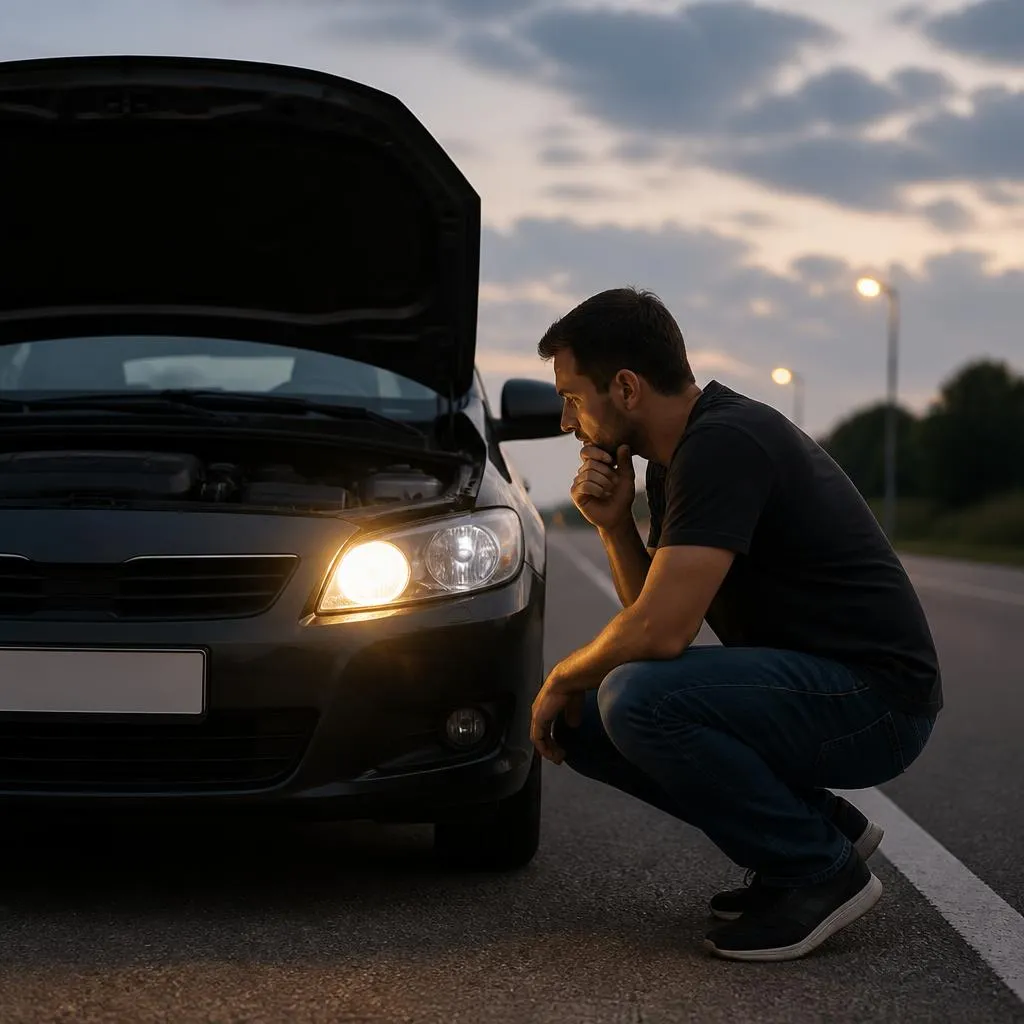
If your headlights dim when AC turns on, the cause is a sudden electrical and mechanical load that your charging system isn’t keeping up with. Turning on the AC energizes the compressor clutch, the blower motor, and often the radiator cooling fans all at once. A brief flicker that recovers in a second is normal on many cars, especially at idle. Lights that stay noticeably dim, pulse, or flicker repeatedly usually point to a weak alternator, a slipping belt, a tired battery, or a bad ground connection.
Why the AC Affects Your Headlights
At idle, your alternator spins slowly and produces less current. When the AC switches on, the blower and cooling fans can draw a lot of power, and the compressor adds mechanical drag to the belt that also turns the alternator. If the system is healthy, voltage dips only momentarily before the alternator and the engine’s idle control catch up. If anything in the charging system is weak, voltage stays low and the headlights stay dim.
Common Causes
1. Weak or Failing Alternator
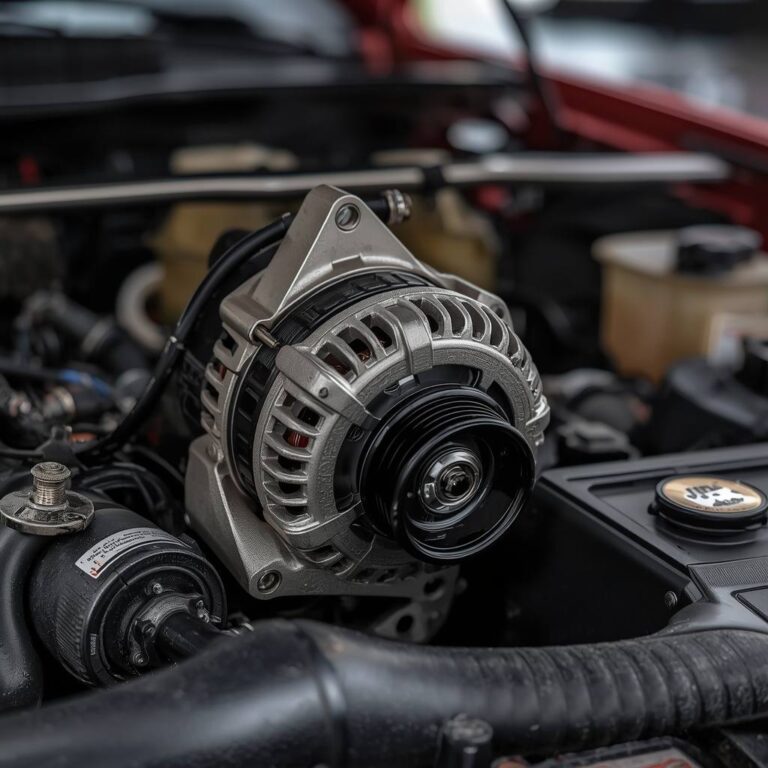
This is the most common cause of lights that stay dim. A worn alternator may still charge enough for normal driving but can’t handle extra load at idle. Watch for a battery warning light, dimming that gets worse at idle and improves when you rev the engine, or a whining noise. Our guide on how to tell if an alternator is bad explains simple voltage tests.
2. Slipping Serpentine Belt
The same belt drives the alternator and AC compressor on most engines. If it’s glazed or the tensioner is weak, the added compressor load can make it slip, so the alternator slows down and output drops. A squeal when the AC engages is a strong clue.
3. Weak or Aging Battery
The battery helps buffer sudden loads. An old or partly sulfated battery can’t smooth out voltage dips as well, so the lights flicker more. If the battery also struggles to start the car, see whether a car battery can be too dead to jump start.
4. Corroded Terminals or a Bad Ground
Corrosion on the battery terminals or a loose engine-to-body ground strap adds resistance. Under heavy load, that resistance causes a bigger voltage drop. Cleaning terminals and tightening grounds is cheap and often solves flickering.
5. Low Idle Speed
The engine computer should raise idle slightly when the AC turns on. If the throttle body is dirty or idle control isn’t working, the alternator spins too slowly to keep up. The same issue often makes the car stumble when the compressor engages.
6. Failing Blower Motor or Cooling Fan
A blower motor or cooling fan with worn bearings or brushes can draw far more current than normal. If dimming is worse on high blower settings, the blower motor may be the problem.
How to Test It Yourself
- With the engine running and all accessories off, measure voltage at the battery. A healthy system typically reads about 13.5 to 14.5 volts.
- Turn on the AC, blower on high, and headlights. Voltage should stay above roughly 13 volts after a brief dip.
- If it falls well below that and stays low, suspect the alternator, belt, or connections.
- Many auto parts stores can test the battery and alternator for free.
If the alternator is the problem, don’t ignore it for long, since driving with a bad alternator can leave you stranded once the battery drains.
Conclusion
When headlights dim when AC turns on, a quick flicker is usually normal, but steady or repeated dimming is a warning sign. Check the battery terminals and grounds, inspect the belt, and test charging voltage with the AC running. A weak alternator is the most common cause, and catching it early saves you from a dead battery at the worst possible time. If yours needs replacing, here’s how long it takes to replace an alternator.
Frequently Asked Questions
Is it normal for lights to flicker when the AC turns on?
A brief flicker that recovers within a second is common, especially at idle. Lights that stay dim or keep flickering point to a charging system problem.
Can a bad battery cause lights to dim with the AC on?
Yes. An old or weak battery can’t buffer sudden electrical loads, so voltage dips more and the lights dim. Have the battery load tested.
Why do my lights dim at idle but not while driving?
The alternator produces less current at idle. If it’s weak or the belt is slipping, it may keep up while driving but not at idle with the AC and other loads on.
What voltage should my car show with the AC on?
With the engine running, most charging systems hold roughly 13.5 to 14.5 volts. A brief dip when the AC engages is normal, but it should not stay well below 13 volts.