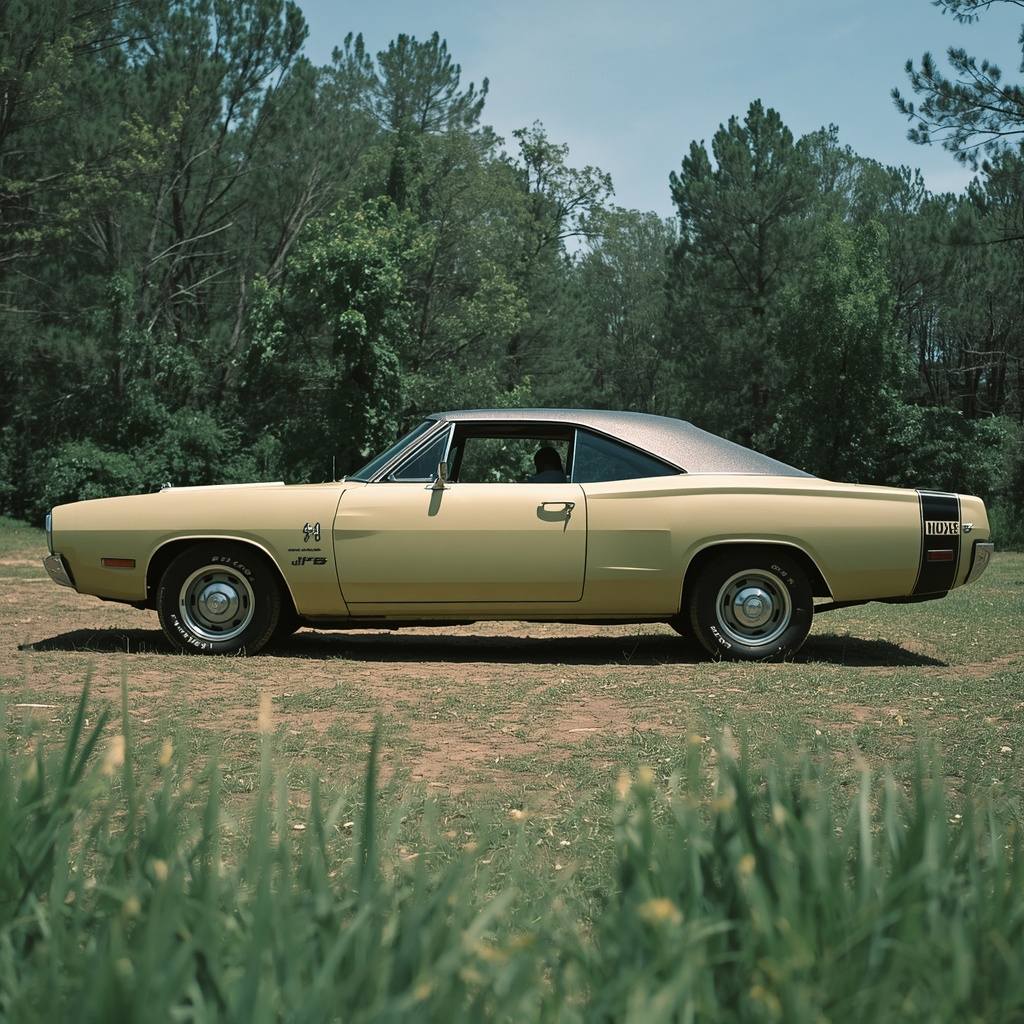
Shopping for tires on a 1970 Challenger gets confusing fast once you realize the factory fitment wasn’t the same across the whole lineup. The correct tire size 1970 Dodge Challenger models left the factory with depends heavily on which engine and trim you have, ranging from E78-14s on the base six-cylinder to F60-15s on the 426 Hemi.
Tire Size 1970 Dodge Challenger Specs by Engine
Dodge used these old-style alphanumeric tire sizes in 1970, a system that predates the metric sizing (like 225/70R14) used on modern tires. Here’s how the factory fitment broke down:
- 225 Slant-Six and 318 V8 (base Challenger): E78-14
- 340 V8: F70-14
- 383 V8 (standard and R/T): F70-14
- 440 V8: F70-14 standard, E60-15 optional (not available on the 440 convertible)
- 426 Hemi V8: F60-15
- Challenger T/A: E60-15 front, G60-15 rear
The alphanumeric code works differently than modern sizing. The letter roughly indicates the tire’s load-carrying capacity and section width, with letters further down the alphabet indicating a wider tire, while the number after the dash is the wheel diameter in inches. An F70-14, for example, is a wider, higher-load tire than an E78-14, even though the numbers alone don’t make that obvious at a glance.
Why the Hemi and T/A Needed Bigger Tires
The jump to 15-inch wheels on the Hemi and T/A wasn’t just about looks. Both cars put significantly more power and weight over the front wheels than the base six-cylinder or small-block V8 models, and the larger F60-15 and E60/G60-15 tires provided the extra load capacity and grip needed to handle that power without excessive wear or flex. Dodge reportedly ran into clearance issues fitting these larger tires on some early production cars, which is part of why fender modifications appeared partway through the model year on Hemi-equipped cars.
Converting to Modern Tire Sizes
Since alphanumeric tires are largely obsolete today, most owners running an original-style tire look for reproduction Polyglas-style tires from companies like Coker Tire, which still manufacture period-correct alphanumeric sizes. Whatever size you land on, make sure the lug nuts holding those wheels on are torqued correctly; while the Challenger rides on Chrysler’s E-body platform rather than the B-body used by cars like the Charger, the 1970 Charger’s lug nut torque spec is still a useful reference point for the era’s typical Mopar wheel hardware. If you’d rather run a modern radial for better handling and longer tread life, common conversions include a 225/70R14 for the F70-14 size and a 235/60R15 or 245/60R15 for the F60-15 Hemi fitment, though exact conversions can vary slightly by tire manufacturer.
Whichever route you choose, keep the overall tire diameter close to the original spec. A tire that’s significantly taller or shorter than stock will throw off your speedometer accuracy and can affect gearing-dependent performance, and it’s worth checking how often to rotate your tires once the new set is on, since a heavier, higher-torque classic can wear tires unevenly if they’re neglected.
Checking Your Specific Car
Factory tire sizes can vary by production date and dealer-installed options, so if you want to confirm your Challenger’s original fitment precisely, check the broadcast sheet if it survived, or the AMA specification sheet for your car’s build date. Once you’ve settled on a size, don’t forget to set the correct pressure; our guide on how to let air out of a tire covers the process if you need to bring an overinflated tire back down to spec. A restoration shop familiar with E-body Mopars can also help verify what left the factory on your specific VIN.
Conclusion
The correct tire size 1970 Dodge Challenger owners should run depends on the engine: E78-14 for the base six-cylinder and 318, F70-14 for the 340, 383, and 440, and F60-15 for the 426 Hemi, with the T/A running a unique E60/G60-15 front-to-rear combination. Whether you go period-correct or modern radial, matching the original tire’s overall diameter will keep your speedometer accurate and your car handling the way it was designed to. If you’re weighing a slightly wider modern radial, our breakdown of using 225 tires instead of 215 covers the same wheel-width and clearance questions that apply here.
Frequently Asked Questions
What does the alphanumeric tire size code actually mean?
The letter indicates the tire’s approximate load range and section width, and the number after the dash is the wheel diameter in inches. It’s an older sizing system that predates today’s metric tire sizes like 225/70R14.
Can I put 15-inch wheels on a base 1970 Challenger with 14-inch wheels?
Yes, this is a common upgrade, and most owners report 15-inch wheels fit without major modifications, though tire width and backspacing still need to be chosen carefully to avoid rubbing.
Are original alphanumeric tires still available new?
Yes, companies like Coker Tire manufacture reproduction Polyglas-style tires in the original alphanumeric sizes, popular for owners doing a numbers-matching or period-correct restoration.
Why did the 440 convertible not offer the optional 15-inch tires?
Factory records indicate the E60-15 optional tire wasn’t offered on the 440 convertible, likely due to a combination of weight distribution and clearance considerations specific to that body style and engine combination.