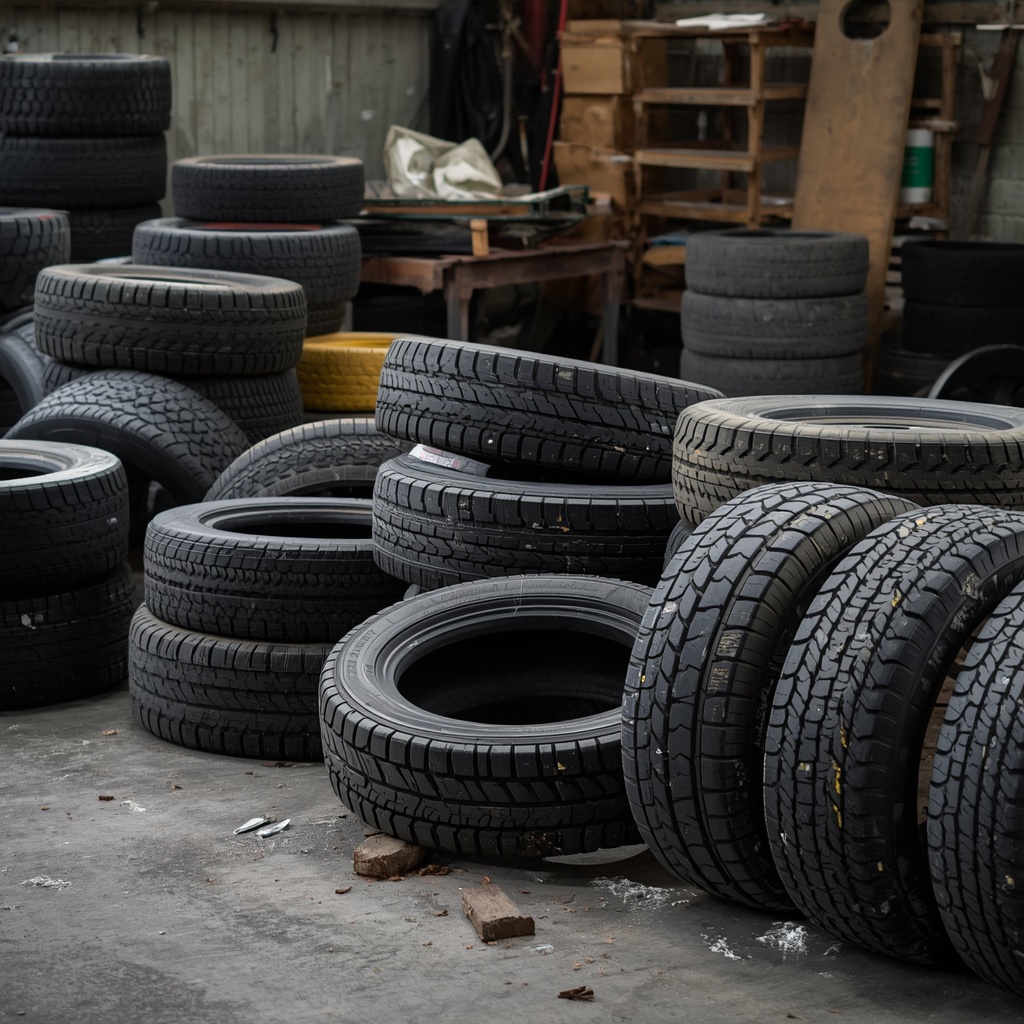
If your car came with 215-width tires and you’ve spotted a good deal on 225s, or your local shop only has 225s in stock, you might be wondering: can you use 225 tires instead of 215? The short answer is usually yes, but it depends on your wheel width, fender clearance, and what else is written on that tire size, not just the first three digits.
What the Difference Between 215 and 225 Actually Means
The numbers in a tire size like 215/60R16 or 225/60R16 refer to the tire’s width in millimeters, measured sidewall to sidewall. So a 225 tire is 10mm wider than a 215 tire, roughly two-fifths of an inch. That might not sound like much, but it changes the tire’s contact patch, its fit on the wheel, and how much clearance it needs inside the wheel well.
Just as important as the width is the rest of the size. If the aspect ratio and wheel diameter stay the same, like going from 215/60R16 to 225/60R16, the overall tire diameter only grows slightly, since the sidewall height is a percentage of the width. That keeps your speedometer and odometer close to accurate. If you change any other number in the sequence, the comparison gets more complicated.
Can You Use 225 Tires Instead of 215? Check Your Wheel Width First
Before anything else, check your wheel’s width, usually stamped on the inner or outer barrel as something like 6.5J or 7J. Most wheels are designed to work with a small range of tire widths, typically spanning two or three sizes. A 6.5-inch-wide wheel, for example, generally works fine with anything from a 195 to a 225 tire. If your wheel falls within that range, fitting a 225 instead of a 215 is usually a safe swap.
If your wheel is on the narrow end, say 5.5 inches, a 225 tire can end up bulging slightly at the sidewalls, which affects handling feel and wears the tread unevenly at the edges, similar to the kind of wear pattern seen with tire feathering. When in doubt, a tire shop can confirm your wheel width in a couple of minutes.
Clearance and Rubbing Concerns
A wider tire needs more room to turn, especially at full lock, and more room to move on its suspension travel. On some cars, especially those with lowered suspension, aftermarket wheels with less offset, or tight wheel wells to begin with, a 225 can rub against the fender liner, the strut, or the sway bar link. This is more common on smaller cars and less of an issue on trucks and larger sedans that already have generous wheel wells.
If you’re on the fence, it’s worth test-fitting one tire and taking the car through a full lock turn in both directions, as well as checking clearance with a passenger or two aboard to simulate a loaded suspension, before committing to a full set.
Load Rating and Speed Rating
Tire size isn’t just about width. Every tire also has a load index and a speed rating, and these need to meet or exceed what your vehicle manufacturer specifies on the door jamb sticker, the same sticker that lists your recommended tire pressure if you ever need to know how to let air out of a tire to hit the correct PSI. Wider tires often, but not always, carry a slightly higher load index, which isn’t a problem on its own, but you should never go below your original tire’s load rating just because the width changed.
What Actually Changes With a Wider Tire
Assuming the fitment checks out, moving from a 215 to a 225 tire brings a few small but real trade-offs. Grip and cornering stability typically improve slightly, thanks to the larger contact patch. Fuel economy can dip a small amount due to increased rolling resistance. Ride comfort may firm up slightly, and road noise can increase a touch, particularly with certain tread patterns. A wider contact patch can also change how accurately your tire pressure sensors read, so it’s worth double-checking your TPMS after the swap. None of these changes are usually dramatic, but they’re worth expecting rather than being surprised by.
Conclusion
So, can you use 225 tires instead of 215? In most cases, yes, as long as your wheel width supports it, you have enough clearance in the wheel wells, and the load and speed ratings meet or exceed your factory specification. Check your door jamb sticker, measure your wheels, and when in doubt, have a tire shop confirm the fitment before you buy a full set. Once installed, keep up with regular tire rotations to help the new set wear evenly.
Frequently Asked Questions
Will 225 tires instead of 215 throw off my speedometer?
Only slightly, and only if you also change the aspect ratio or wheel diameter. Keeping those the same while going from 215 to 225 usually changes overall diameter by less than 1 percent, which most speedometers won’t register.
Do I need an alignment after switching to 225 tires?
Not because of the tire size change itself, but it’s good practice to check your alignment any time you install a new set of tires, since uneven wear on the old set can mask an existing alignment issue.
Can I mix 215 and 225 tires on the same axle?
No, tires on the same axle should always match in size. Mismatched widths can cause uneven handling, especially under braking, and some vehicles with all-wheel drive can suffer drivetrain damage from mismatched tire diameters.
Is a wider tire always better for winter driving?
Not necessarily. Narrower tires often perform better in snow because they cut through to the road surface more easily, while wider tires can float on top of snow and lose traction.