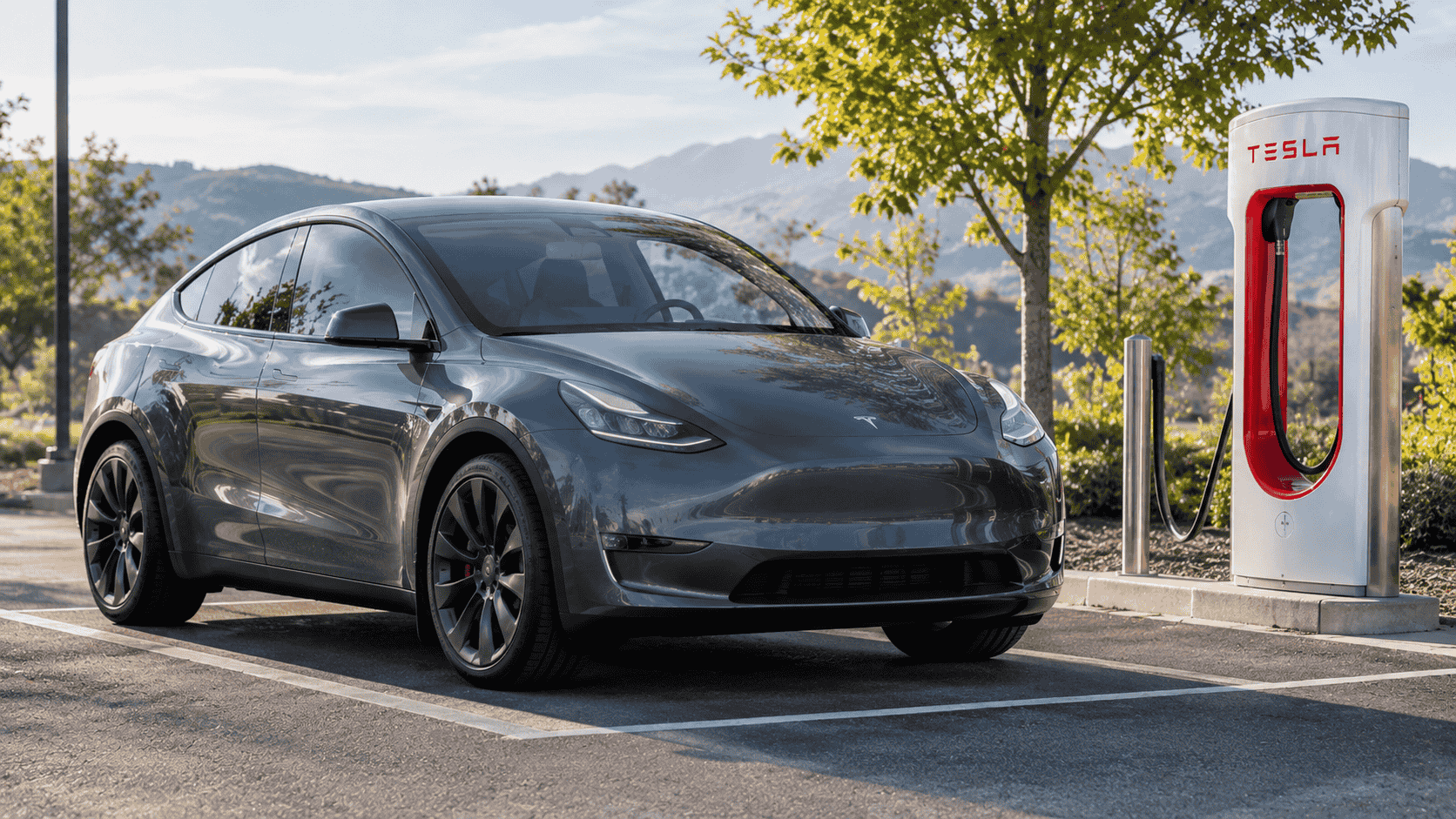
Heading to the airport for two weeks, or storing the car for a season? How long can a Tesla Model Y sit without charging depends mostly on how much charge you leave it with. Tesla’s owner’s manual says the battery can discharge at roughly 1% per day while parked, so a Model Y left at 60% could, in ideal conditions, sit for several weeks. Cold weather, Sentry Mode, and other settings can speed that drain up considerably.
The 1% Per Day Rule
Tesla’s guidance is simple: plan for about 1% of battery loss for every day the car sits unplugged, and leave it with enough charge to cover that. For a 14-day trip, that’s around 14%, plus a healthy buffer so you’re not returning to a nearly empty battery. The manual stresses that the discharge rate can vary depending on the weather, the vehicle’s configuration, and the settings you choose on the touchscreen.
What Drains a Parked Model Y Faster
- Sentry Mode: keeps the cameras and computer running and is one of the biggest sources of parked drain.
- Cabin Overheat Protection: runs the fan or A/C on hot days to keep the cabin cool.
- Cold weather: the car uses energy to protect the battery in freezing temperatures.
- Frequent app checks: every time you open the Tesla app, the car may wake up and use power.
- Third-party apps: services that poll the car regularly can keep it from sleeping.
Turning off Sentry Mode and Cabin Overheat Protection, and resisting the urge to check the app every day, can noticeably extend how long the car can sit.
Why You Should Never Let It Reach 0%
Tesla warns that letting the high voltage battery discharge to 0% can damage vehicle components. Once the main battery gets very low, it stops supporting the onboard electronics and the low voltage battery. At that point, you may not be able to unlock, charge, or use the car without jump starting or replacing the low voltage battery. It’s a similar situation to when a car battery is too dead to jump start. Tesla also notes that leaving a Model Y unplugged for an extended period can cause permanent damage to the main battery.
Best Practice: Leave It Plugged In
The single most important tip in Tesla’s manual is to leave the car plugged in when you’re not using it. The car stops charging at the limit you set, so it won’t overcharge. For long-term storage, Tesla recommends leaving the battery at around 50% and keeping it plugged in if possible. Avoid leaving it parked at or near 0% or 100% for long stretches.
If you can’t plug in, for example at an airport lot, charge to a level that comfortably covers the 1% per day estimate plus extra margin. Then turn off features that keep the car awake, and check the charge from the app only occasionally.
Other Things to Check Before Storage
Battery charge isn’t the only concern when a car sits. Tires slowly lose air, and sitting with low pressure for weeks can cause flat spots. Set them to the recommended pressure before you leave, and read up on how long a car can sit on a flat tire if one goes soft. When you get back, a quick look over the car using our car maintenance checklist helps catch anything that changed while it was parked. Our guide on how long tires last also covers how age affects rubber even when a car isn’t driven.
Conclusion
How long can a Tesla Model Y sit without charging? As a rule of thumb, plan on losing about 1% of charge per day, more in cold weather or with Sentry Mode on. A Model Y with a healthy charge can sit for several weeks, but the safest choice is always to leave it plugged in at around 50% for long-term storage, and never let the battery fall to 0%.
Frequently Asked Questions
How much battery does a Model Y lose per day when parked?
Tesla’s manual estimates about 1% per day, though cold weather, Sentry Mode, Cabin Overheat Protection, and frequent app checks can increase the drain.
Is it bad to leave a Tesla Model Y plugged in all the time?
No. Tesla recommends leaving the car plugged in when it isn’t being used. It stops charging at your set limit, so it won’t overcharge.
What charge level should I leave my Model Y at for storage?
For long-term storage, Tesla recommends leaving the battery at around 50% and keeping the car plugged in if possible.
What happens if a Model Y battery goes to 0%?
The car may not unlock, charge, or start without jump starting or replacing the low voltage battery, and Tesla warns that a fully discharged battery can damage vehicle components.