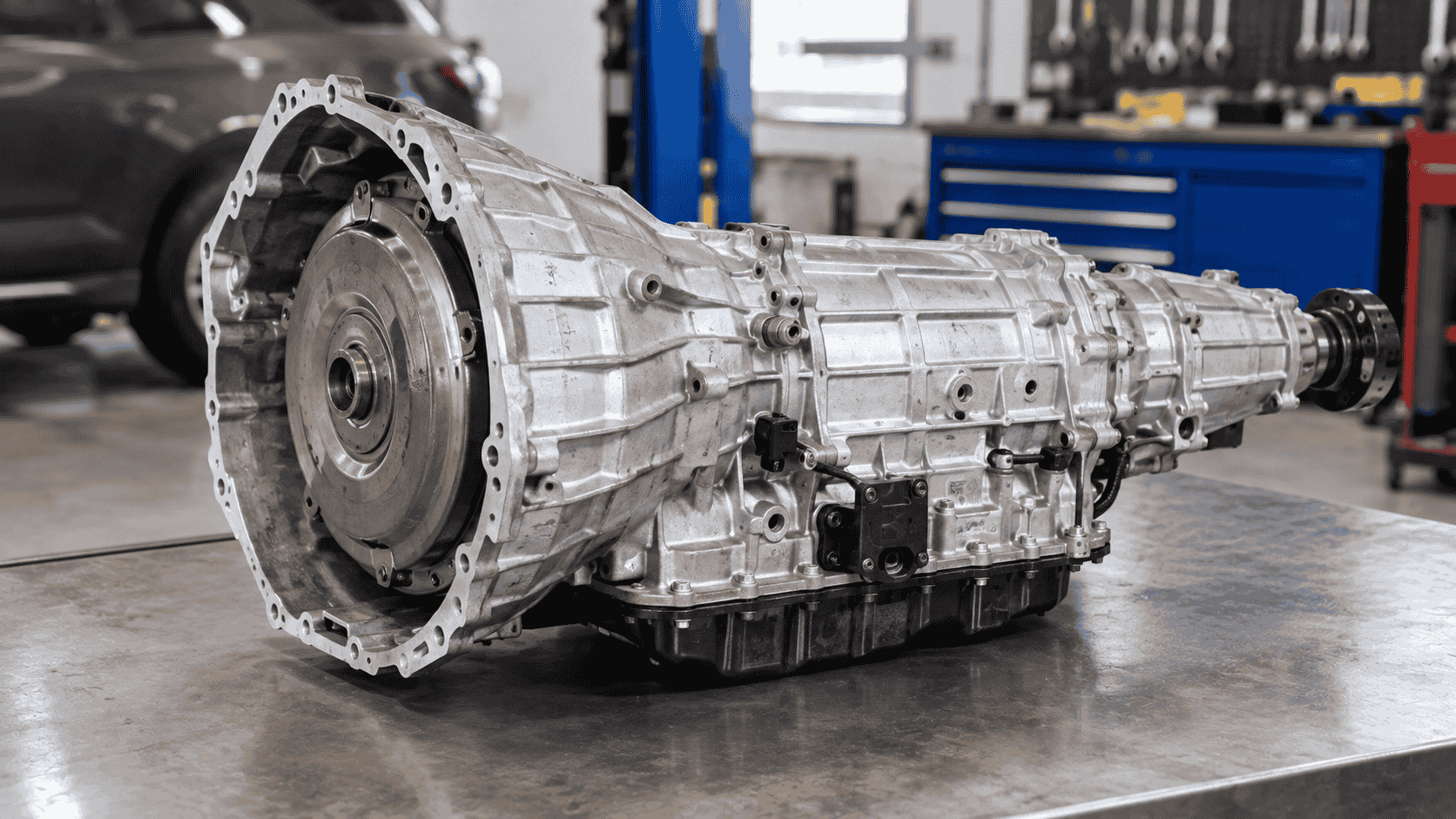
Whether you’re planning to pull a transmission for a rebuild, ship one across the country, or just curious what’s hanging beneath your car, the number matters more than you’d think. So how much does an automatic transmission weigh? On average, most passenger car automatic transmissions weigh between 100 and 400 pounds, with the typical sedan or crossover landing somewhere in the 150 to 250 pound range.
How Much Does an Automatic Transmission Weigh by Vehicle Type
Transmission weight scales with the vehicle it’s built for and how much torque it needs to handle. Here’s a general breakdown:
- Compact and midsize cars (4 to 6-speed automatic): roughly 120 to 180 pounds
- Larger sedans and crossovers (6 to 8-speed automatic): roughly 150 to 220 pounds
- Half-ton trucks and full-size SUVs: roughly 190 to 250 pounds
- Heavy-duty trucks: 250 pounds and up, sometimes exceeding 300 pounds
These figures are for the transmission alone, without fluid. A full automatic transmission typically holds 8 to 12 quarts of transmission fluid, which adds another 15 to 25 pounds once filled, so don’t forget to account for that if you’re calculating total weight for shipping or lifting purposes.
Why Automatic Transmissions Weigh More Than Manuals
An automatic transmission is a considerably more complex piece of hardware than a manual gearbox. It houses a torque converter, multiple clutch packs, a valve body, and a planetary gear set, all of which add mass compared to a manual’s simpler synchronizer-and-gear setup. On average, an automatic transmission weighs 50 to 75 pounds more than the manual transmission offered in the same vehicle, with the exact gap depending on the number of gears and the transmission’s overall design.
Why This Number Matters
Knowing your transmission’s approximate weight matters for a few practical reasons. If you’re pulling one for a rebuild or replacement, it tells you what kind of jack, engine hoist, or transmission jack you’ll need, since these aren’t safe to lift by hand, the same caution worth taking with wheel work like knowing the correct lug nut torque spec before reinstalling a wheel. If you’re shipping a used transmission, the weight directly affects freight cost. And if you’re doing a swap into a different chassis, matching or accounting for the weight difference can affect your car’s front-to-rear weight balance, particularly relevant if you’re also weighing something like a 5.7 Hemi engine’s weight for the same build.
Handling a Transmission Safely
Given that even a standard passenger car automatic transmission can exceed 150 pounds, this isn’t something to lift manually. A hydraulic transmission jack, ideally one with a tilting or leveling head, is the standard tool for the job, letting you carefully align the transmission with the engine or bellhousing while supporting its full weight. Attempting to muscle a transmission into place by hand risks both injury and damage to the transmission’s delicate mating surfaces. It’s also a good moment to double-check other under-car fluids while everything’s apart, the same logic behind knowing your coolant capacity before a flush rather than guessing.
Conclusion
So, how much does an automatic transmission weigh? Most passenger car automatics fall between 150 and 250 pounds dry, with trucks and heavy-duty applications running higher, sometimes past 300 pounds. Add another 15 to 25 pounds once it’s filled with fluid, and always use a proper transmission jack rather than attempting to lift or support one by hand. Keeping track of details like this is exactly what our car maintenance checklist is meant to help with.
Frequently Asked Questions
Does a CVT weigh more or less than a traditional automatic?
A CVT typically weighs slightly less than a traditional stepped automatic of similar size, since it uses a pulley-and-belt system rather than multiple clutch packs and a full planetary gear set, though it still weighs more than a comparable manual transmission.
How much does a 10-speed automatic transmission weigh?
A modern 10-speed automatic, like those found in newer half-ton trucks, typically weighs around 220 to 230 pounds dry, slightly more than the 6-speed units they replaced due to the added gear sets.
Can I lift a car transmission by myself?
It’s not recommended. Even a lighter passenger car automatic can weigh well over 100 pounds and has an awkward, unbalanced shape, making a proper transmission jack the safer choice over manual lifting.
Does transmission weight affect a car’s fuel economy?
Only marginally. While a heavier transmission does add to the car’s overall curb weight, the difference between transmission types is small relative to total vehicle weight, so its effect on fuel economy is minor compared to factors like gear ratios and torque converter efficiency.