
If your car jerks only when AC is on, the air conditioning itself usually isn’t broken. The AC compressor is driven by the engine’s accessory belt, and every time its clutch engages it adds a noticeable load. A healthy engine raises its idle slightly to handle that load smoothly. If something is already weak, such as a dirty throttle body, worn spark plugs, a slipping belt, or a failing compressor, the extra load exposes it as jerking, surging, or stumbling.
Why the AC Makes the Car Jerk
The compressor can take several horsepower from the engine, and its clutch cycles on and off as the system maintains pressure. Each time it engages, the engine feels a sudden drag. On small engines, a slight dip is normal. But a sharp jerk, repeated surging, or a stall points to a problem in how the engine handles load. For jerking that also happens without the AC, see our main guide on why a car jerks when accelerating.
Common Causes
1. Dirty Throttle Body or Faulty Idle Control
The engine computer bumps idle speed when the AC turns on. If carbon buildup restricts the throttle body, or an older car’s idle air control valve is sticking, the engine can’t compensate quickly. The result is a stumble or jerk every time the compressor kicks in. Cleaning the throttle body is an inexpensive first fix on many cars.
2. Weak Ignition Components
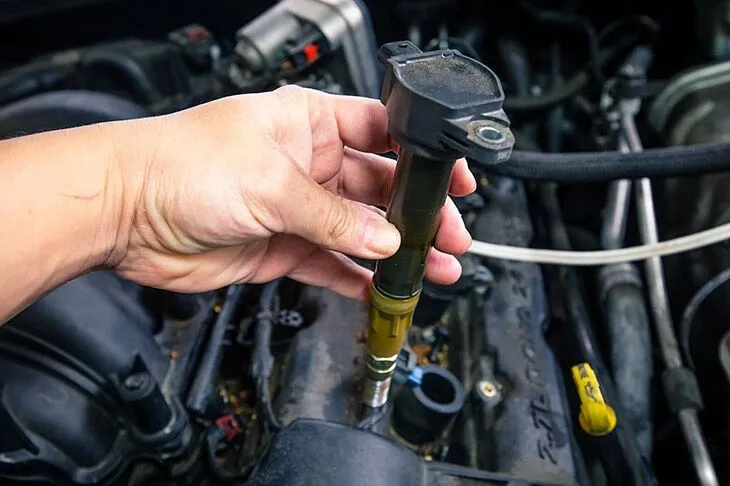
Worn spark plugs or a failing ignition coil may work fine under light load but misfire when the AC adds drag. A flashing check engine light or a misfire code supports this. Our guide on how long you can drive with a misfire explains the risks.
3. Failing AC Compressor or Clutch
A compressor with internal wear can drag harder than normal, and a worn clutch can grab and release abruptly. Both can make the engine jerk. Listen for grinding or squealing from the compressor, and watch whether the clutch is cycling on and off very rapidly, which can also signal low refrigerant.
4. Slipping or Worn Serpentine Belt
A glazed belt or weak tensioner can slip when the compressor loads it, causing squealing and uneven power to accessories. The belt also drives the alternator, so slipping can affect charging too.
5. Weak Alternator or Electrical Load
Running the AC turns on the blower fan, compressor clutch, and often the cooling fans. If the alternator is weak, voltage drops can upset engine management and cause rough running. Check out how to tell if an alternator is bad if your lights also dim when the AC comes on.
6. Worn Engine Mounts
Sometimes the engine isn’t actually running worse, but bad mounts let it rock each time the compressor engages, and you feel it as a jerk. A visible engine rock or a clunk when the AC cycles points to the mounts.
Is Some Jerk Normal?
A small, brief dip in RPM when the compressor clicks on is normal, especially in small four-cylinder cars at idle. What isn’t normal is a hard jerk while driving, repeated surging, rough idle, or stalling. Those symptoms mean the engine or the AC system needs attention. If the AC also isn’t cooling well, its cooling system connection matters; learn whether coolant affects the air conditioning.
How to Diagnose and Fix It
- Scan for trouble codes, especially misfire and idle control codes.
- Watch the tachometer as the AC cycles: a large drop points to idle control.
- Clean the throttle body and inspect the belt and tensioner.
- Check spark plugs and coils if they are near their service interval.
- Have the compressor and refrigerant charge checked if the clutch cycles rapidly.
- Test battery and charging voltage with the AC running.
Conclusion
When a car jerks only when AC is on, the extra load from the compressor is revealing a weakness somewhere else. Start with the simple, common fixes: clean the throttle body, check the belt, and look at spark plugs and coils. If those are fine, have the compressor, refrigerant charge, charging system, and engine mounts checked. Fixing the root cause restores smooth driving and protects the AC system.
Frequently Asked Questions
Is it normal for RPM to drop when the AC turns on?
A small, brief dip is normal, especially at idle. The engine should recover within a second. A large drop, rough idle, or stalling is not normal.
Can low refrigerant cause jerking?
It can contribute. Low refrigerant makes the compressor clutch cycle on and off rapidly, and each engagement adds load, which can feel like repeated jerks.
Can a dirty throttle body cause jerking with the AC on?
Yes. Carbon buildup can stop the engine from raising idle enough to handle the compressor load, causing stumbling or jerking when the AC engages.
Is it safe to keep driving if the car jerks with the AC on?
Usually for a short time, but have it checked. Turn the AC off to see if driving smooths out, and avoid driving if the car stalls or the check engine light flashes.