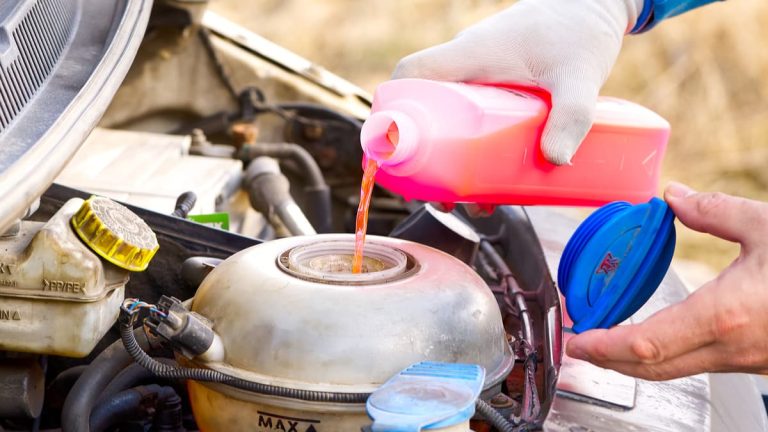
If you’re doing a coolant flush on a classic Mustang, guessing how much antifreeze to buy is a good way to end up with either a mess or a second trip to the parts store. The coolant capacity 1972 Ford Mustang engines need varies depending on which of the three engines is under the hood, ranging from around 9 quarts on the base six-cylinder to over 15 quarts on the big-block V8, the same 302 covered in our guide to oil capacity for the 1972 Mustang 302.
Coolant Capacity 1972 Ford Mustang Specs by Engine
The 1972 Mustang was offered with three engine options: the 250 cubic inch inline-six, the 302 cubic inch V8, and the 351 Cleveland V8. Each has a different cooling system capacity, largely due to differences in block size, radiator size, and whether the car was ordered with factory air conditioning, which typically adds a larger radiator and slightly more capacity.
As a general guide for a full, bone-dry refill:
- 250 inline-six: approximately 9 quarts (2.25 gallons)
- 302 V8: approximately 15 quarts (3.75 gallons)
- 351 Cleveland V8: approximately 15.5 quarts (roughly 3.9 gallons), including about 1 quart for the heater core
These numbers assume a completely empty system. If you’re doing a simple drain-and-refill through the radiator petcock without pulling the block drain plugs, you’ll typically only get 40 to 50 percent of that fluid out, since coolant remains trapped in the engine block and heater core.
Why a Partial Drain Doesn’t Match the Full Capacity
Owners doing a routine coolant flush are often surprised that draining the radiator only yields around 2 gallons, even on a system rated for over 3.75 gallons. This is normal. The block sits at an angle, and unless you remove the block drain plugs on both sides of the engine and disconnect the heater hoses to blow out the heater core, a significant amount of old coolant stays behind, diluting whatever fresh coolant you add afterward.
If you want as close to a full flush as possible, plan on removing the block drain plugs, running plain water through the system a few times until it runs clear, and only then filling with your final coolant and water mixture; it’s also worth confirming whether coolant and antifreeze are actually the same thing before you shop for supplies.
Mixing Ratio and Coolant Type
Once you know your engine’s coolant capacity, mix your antifreeze with distilled water at a 50/50 ratio for most climates, which provides freeze protection down to around -34°F and a reasonable boiling point buffer. If you live somewhere with especially harsh winters, some antifreeze manufacturers offer a 70/30 antifreeze-heavy mix for additional protection, though straight, undiluted antifreeze is never recommended.
For a period-correct classic build, a conventional green IAT coolant is the traditional choice, since these engines were designed around that chemistry, and their older gaskets and hoses tend to pair better with it than with modern OAT formulas; if you’re unsure whether you can use green coolant instead of orange, don’t just top off, do a full flush first.
Signs Your Cooling System Needs Attention
On a car this age, it’s worth inspecting the radiator, hoses, water pump, and heater core for age-related wear whenever you’re doing a flush, rather than just refilling and hoping for the best; a weak system here is one of the more common reasons behind an older car’s overheating on a hot day. A 50-plus-year-old cooling system has had a lot of time to accumulate rust, scale, and worn rubber, all of which reduce your effective cooling capacity even if the fluid level itself looks fine.
Conclusion
The coolant capacity 1972 Ford Mustang engines call for ranges from about 9 quarts on the 250 six-cylinder to roughly 15.5 quarts on the 351 Cleveland V8, with the 302 V8 sitting in between at about 15 quarts. Remember that a simple radiator drain won’t remove all of the old coolant, so budget slightly more antifreeze than the bare capacity number if you’re aiming for a complete flush.
Frequently Asked Questions
How much coolant actually drains out of a 1972 Mustang radiator?
Typically only about 2 gallons, even though the full system capacity is higher, since coolant remains trapped in the engine block and heater core unless you remove the block drain plugs.
Can I use modern orange OAT coolant in a 1972 Mustang?
It’s possible, but many classic car owners stick with traditional green IAT coolant, since the engine’s original gaskets, hoses, and metals were designed around that older chemistry.
Does factory air conditioning change the coolant capacity?
Yes, cars ordered with factory A/C typically came with a larger radiator, which adds slightly more coolant capacity compared to the same engine without air conditioning.
How often should I flush the coolant on a classic Mustang?
Every 2 years or so is a safe interval for conventional green coolant, though a car that’s driven infrequently should still have its coolant checked annually for rust, scale, or a sour smell that signals it needs changing regardless of mileage.