Quick Answer
If your brakes squeak only in the morning, the most common cause is overnight moisture creating a thin layer of surface rust on the brake rotors. The squeaking usually disappears after a few stops as the brake pads clean the rotor surface. However, if the noise continues after driving or becomes louder over time, it could indicate worn brake pads, glazed rotors, or another brake problem that should be inspected.
Why Do My Brakes Squeak Only in the Morning?
Hearing your brakes squeak during the first few stops of the day can be alarming, but in many cases, it’s completely normal. Brake systems are exposed to rain, humidity, temperature changes, and condensation while your vehicle is parked overnight. These conditions can create temporary friction that causes a high-pitched squeak until the brakes warm up.
If the noise disappears after driving for a minute or two and your vehicle brakes normally, there’s usually no cause for concern. However, if the squeaking persists every time you brake or is accompanied by grinding, vibration, or reduced braking performance, the issue may require inspection.
Overnight Moisture on the Brake Rotors
The most common reason brakes squeak only in the morning is overnight moisture. Even on clear nights, moisture from the air can settle on the metal brake rotors. When you press the brake pedal for the first time, the brake pads rub against this damp surface, creating a brief squeaking or squealing sound.
This noise typically lasts for only a few stops before the friction dries the rotor surface. It is especially common if your vehicle has been parked outside overnight.
Light Surface Rust After Parking
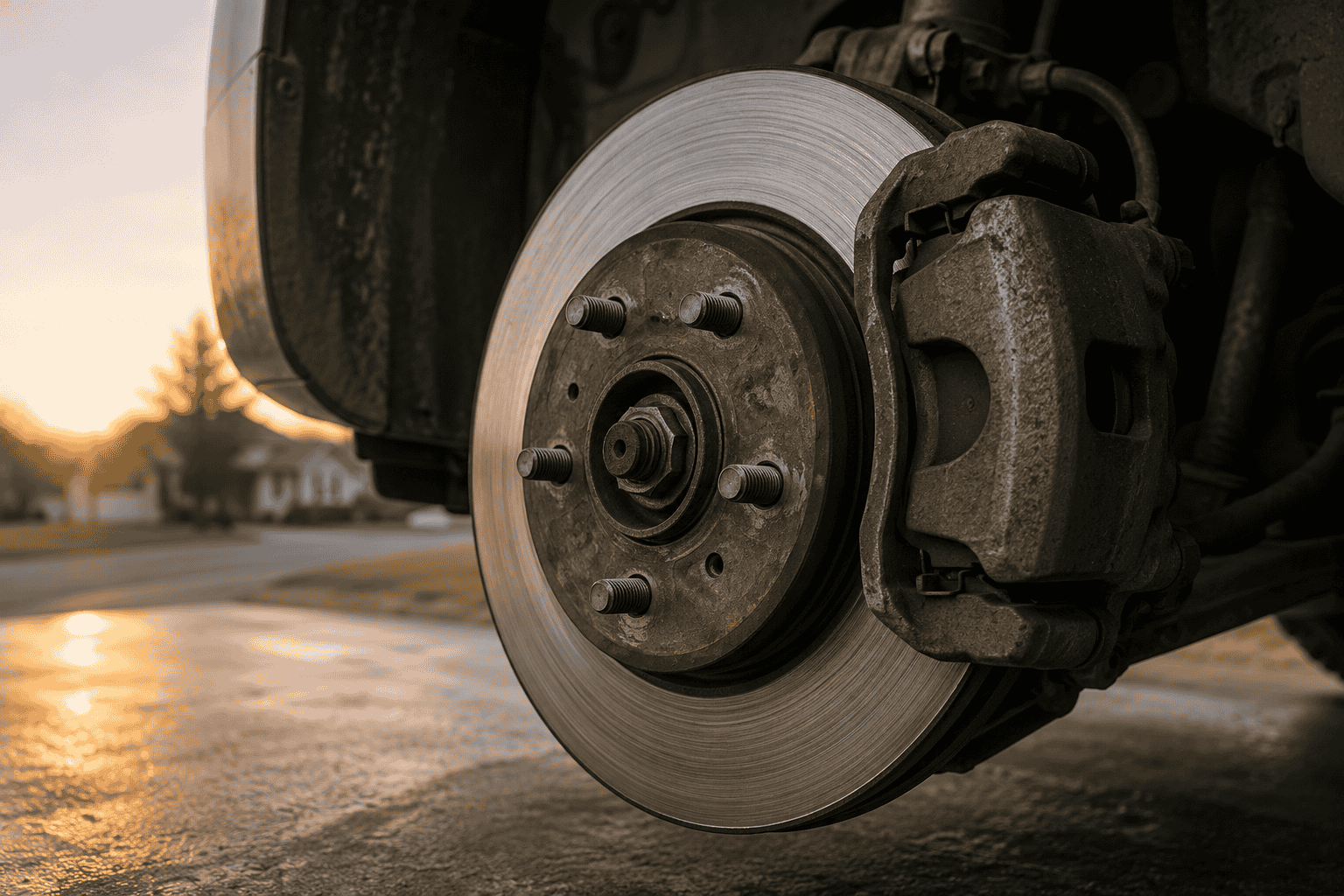
Brake rotors are made from cast iron, which can develop a thin layer of surface rust within hours, especially in humid or rainy conditions. This rust is usually harmless and is quickly scraped away when the brake pads contact the rotors.
You may notice:
- A squeaking or squealing noise during the first few brake applications.
- Slightly rough braking for the first stop or two.
- The noise disappearing once the rust has been cleaned off.
This type of surface rust is considered normal and does not usually damage your braking system.
Cold Temperatures Affecting Brake Components
Cold mornings can also make your brakes noisier. Lower temperatures affect the way brake pads, rotors, and other brake components expand and contract. Before they reach their normal operating temperature, they may produce a temporary squeak.
This is more noticeable if:
- Temperatures drop significantly overnight.
- Your vehicle has performance or semi-metallic brake pads.
- The brakes haven’t been used for several hours.
Once the brakes warm up through normal driving, the sound often disappears.
Condensation in Humid Weather
If you live in a humid climate, condensation can collect on your brake rotors almost every night. The combination of moisture and light oxidation increases friction during the first few brake applications, causing a temporary squeak.
Morning brake noise caused by condensation is especially common:
- During spring and fall.
- After rainy or foggy nights.
- In coastal or high-humidity areas.
- When vehicles are parked outdoors instead of inside a garage.
If the squeaking stops after a few minutes of driving and the brakes feel normal, condensation is likely the cause. However, if the noise continues throughout your trip, it’s worth checking the brake pads, rotors, and hardware for wear or damage.
Is It Normal for Brakes to Squeak in the Morning?
Yes, it is often normal for brakes to squeak only in the morning, especially if the sound disappears after the first few stops. Overnight moisture, light surface rust, and cool temperatures commonly cause temporary brake noise that goes away once the brake pads clean and warm the rotors.
However, not every morning squeak should be ignored. If the noise continues after driving or is accompanied by other symptoms, it could point to worn or damaged brake components that need attention.
When the Noise Is Considered Normal
Morning brake squeaking is usually not a cause for concern if it meets the following conditions:
- The squeak occurs only during the first few brake applications.
- The noise disappears after driving for a minute or two.
- Braking performance feels normal with no loss of stopping power.
- There is no vibration, grinding, or pulling while braking.
- The vehicle has been parked overnight, especially outdoors or in humid weather.
In these situations, the noise is most likely caused by surface rust or condensation on the brake rotors. As the brake pads contact the rotors, the rust and moisture are quickly removed, eliminating the squeak.
This type of temporary brake noise is common on many vehicles and generally doesn’t indicate a mechanical problem.
When Morning Brake Squeaking Is Not Normal
Morning brake squeaking should not be considered normal if it continues after the brakes have warmed up or becomes more frequent over time. Persistent brake noise may indicate that one or more brake components need inspection or replacement.
Watch for these warning signs:
- The squeaking continues throughout your drive.
- The noise becomes louder or changes into a grinding sound.
- You feel vibrations or pulsation in the brake pedal.
- The vehicle takes longer to stop than usual.
- The brake warning light turns on.
- The squeak occurs every time you brake, regardless of the weather or time of day.
- The brake pads are visibly thin or nearing the end of their service life.
These symptoms could be caused by worn brake pads, glazed pads or rotors, damaged hardware, uneven rotor wear, or a sticking brake caliper. Ignoring persistent brake noise can lead to more expensive repairs and may reduce braking performance.
If your brakes squeak only in the morning and stop after a few stops, the issue is usually harmless. But if the squeaking persists, worsens, or is accompanied by other braking problems, it’s best to have the brake system inspected as soon as possible.
How Long Should Morning Brake Squeaking Last?
In most cases, morning brake squeaking should only last for the first few brake applications. As the brake pads remove overnight moisture and light surface rust from the rotors, the noise typically fades away and the brakes return to normal.
The exact duration depends on the weather, humidity, and how long the vehicle has been parked. On dry mornings, the squeak may disappear almost immediately, while on damp or rainy days, it can take a little longer.
Noise That Disappears After a Few Stops
If the squeaking goes away after 2 to 5 brake applications or within the first few minutes of driving, it’s usually considered normal.
This happens because:
- The brake pads wipe away surface rust from the rotors.
- Moisture and condensation evaporate as the brakes warm up.
- The brake components reach their normal operating temperature.
- Friction between the pads and rotors becomes consistent again.
As long as the brakes feel responsive and there are no other unusual symptoms, this type of temporary morning squeak is generally nothing to worry about.
Noise That Continues After Driving
If your brakes continue squeaking after several minutes of driving, the issue is less likely to be caused by moisture or surface rust.
Persistent brake noise may indicate problems such as:
- Worn brake pads
- Glazed brake pads or rotors
- Uneven or damaged brake rotors
- Loose or worn brake hardware
- A sticking brake caliper
- Dirt, debris, or small stones trapped between the brake pad and rotor
If the squeaking remains after the brakes have warmed up, becomes louder, or is accompanied by grinding, vibration, or reduced braking performance, the brake system should be inspected promptly. Addressing the issue early can help prevent further wear and avoid more costly repairs.
Common Causes of Morning Brake Squeaking
Not all brake squeaks have the same cause. Some are completely normal and disappear after a few stops, while others indicate that your brake system needs maintenance or repair. The table below summarizes the most common reasons your brakes squeak only in the morning, how serious they are, and what you should do next.
| Cause | Is It Serious? | Typical Symptoms | Recommended Action |
|---|---|---|---|
| Surface rust on brake rotors | No (usually normal) | Squeaks during the first few stops after the vehicle has been parked overnight; noise disappears quickly | Drive normally if the noise goes away within a few brake applications. |
| Overnight moisture or condensation | No | Brief squeaking on damp, rainy, or humid mornings; braking performance remains normal | No repair is usually needed. The noise should disappear as the brakes dry out. |
| Worn brake pads | Yes | Squeaking continues throughout the drive, reduced pad thickness, possible brake wear indicator noise | Inspect the brake pads and replace them if they are worn below the recommended thickness. |
| Glazed brake pads or rotors | Moderate | High-pitched squeal even after the brakes warm up; braking may feel less effective | Have the brake system inspected. Pads or rotors may need resurfacing or replacement. |
| Dust or debris between the pad and rotor | Usually minor | Intermittent squeaking, especially after driving on dusty or gravel roads | Clean the brake components or have them inspected if the noise persists. |
| Low-quality brake pads | Low to Moderate | Frequent squeaking despite normal brake performance, especially in cold weather | Consider replacing the pads with higher-quality OEM or premium aftermarket brake pads. |
| Brake hardware issues | Yes | Constant squeaking, rattling, uneven pad wear, or inconsistent braking | Inspect and replace damaged or worn brake clips, shims, springs, or other hardware as needed. |
Tip: If your brakes squeak only in the morning and become quiet after a few stops, the cause is usually harmless surface rust or moisture. However, if the noise persists, gets worse, or is accompanied by grinding, vibration, or reduced stopping power, have your brake system inspected as soon as possible.
How to Tell Whether Your Brake Squeak Is a Problem
Not every brake squeak means something is wrong. The key is to pay attention to when the noise occurs, how long it lasts, and whether it’s accompanied by other symptoms. A brief squeak on your first drive of the day is often harmless, while persistent noises or changes in braking performance may signal a mechanical issue.
Here’s how to tell the difference.
Squeaking Only on the First Drive
If your brakes squeak only during the first few stops in the morning and then become quiet, the cause is usually normal.
This type of squeaking is commonly caused by:
- Overnight moisture on the brake rotors
- Light surface rust that forms while the vehicle is parked
- Cool temperatures affecting the brake pads and rotors
- Humid weather causing condensation
As long as the noise disappears within a few minutes, your brakes feel responsive, and there are no warning lights or vibrations, there’s generally no need for immediate repairs.
Squeaking While Braking All Day
If the squeaking continues throughout the day, even after the brakes have warmed up, it should not be ignored.
Persistent brake squeaking may indicate:
- Worn brake pads
- Glazed brake pads or rotors
- Low-quality or improperly installed brake pads
- Brake dust buildup
- Loose or damaged brake hardware
- A sticking brake caliper
Unlike temporary morning squeaks, continuous brake noise often means the brake system needs inspection. Fixing the issue early can prevent additional wear and help maintain safe braking performance.
Grinding Instead of Squeaking
A grinding noise is much more serious than a squeak. It often means the brake pads are severely worn, allowing the metal backing plate to contact the brake rotor.
Possible consequences include:
- Damaged brake rotors
- Reduced stopping power
- Higher repair costs
- Increased risk of brake failure
If you hear grinding, avoid unnecessary driving and have the brakes inspected as soon as possible.
Brake Vibration or Pulsation
If the squeaking is accompanied by vibration in the brake pedal or pulsation while braking, the problem may involve more than just the brake pads.
Common causes include:
- Warped or uneven brake rotors
- Uneven brake pad wear
- Loose brake components
- Suspension or wheel-related issues affecting braking
Brake vibration should never be ignored, especially if it occurs at higher speeds or during hard braking. A professional inspection can identify the underlying cause and prevent further damage to the braking system.
Rule of thumb: If your brakes squeak only in the morning and stop after a few brake applications, the cause is usually temporary moisture or surface rust. If the noise persists, changes to grinding, or is accompanied by vibration or reduced braking performance, it’s time to have your brakes checked.
How to Fix Brakes That Squeak Only in the Morning
The right solution depends on why your brakes are squeaking. In many cases, morning brake noise disappears on its own and doesn’t require any repairs. However, if the squeaking continues after the brakes have warmed up or keeps getting worse, it’s important to inspect the braking system before the problem becomes more serious.
Drive Normally for a Few Minutes
If the squeaking only occurs during the first few brake applications after your vehicle has been parked overnight, drive normally and use the brakes gently.
This allows the brake pads to:
- Remove light surface rust from the rotors.
- Dry off moisture or condensation.
- Warm the brake components to their normal operating temperature.
If the noise disappears within a few minutes, it was most likely caused by overnight moisture or surface rust and usually doesn’t require any repairs.
Inspect Brake Pads
If the squeaking continues after driving, inspect the brake pads for signs of wear.
Look for:
- Thin brake pad material.
- Uneven pad wear.
- Cracks or damage.
- Glazed or shiny brake pad surfaces.
Many brake pads include a built-in wear indicator that produces a squealing sound when the pads become too thin. Replacing worn pads early helps protect the brake rotors and maintains safe stopping performance.
Clean Brake Dust
Excessive brake dust, dirt, or small debris trapped between the brake pad and rotor can also cause squeaking.
If you suspect dirt buildup:
- Inspect the brakes for visible debris.
- Clean the brake components using a brake cleaner designed for automotive brake systems.
- Avoid using compressed air, which can spread harmful brake dust particles.
Keeping the braking system clean can reduce unnecessary noise and improve braking performance.
Replace Worn Brake Components
If the brake pads, rotors, or hardware are worn or damaged, cleaning alone won’t solve the problem.
Components that may need replacement include:
- Brake pads
- Brake rotors
- Brake shims and clips
- Anti-rattle hardware
- Brake calipers (if sticking or damaged)
Replacing worn components restores proper braking performance and helps eliminate persistent squeaking.
Have the Braking System Inspected
If you’re unsure what’s causing the noise—or if the squeaking is accompanied by grinding, vibration, reduced stopping power, or a brake warning light—have the entire braking system inspected by a qualified technician.
A professional inspection can identify issues such as:
- Uneven rotor wear
- Glazed brake pads
- Sticking brake calipers
- Damaged brake hardware
- Hydraulic brake system problems
Prompt diagnosis not only eliminates annoying brake noise but also helps ensure your vehicle remains safe to drive. If the squeaking only happens in the morning and consistently disappears after a few stops, monitoring the brakes is usually sufficient. But if the noise persists or worsens, don’t delay having the system checked.
Can Weather Cause Brake Squeaking?
Yes. Weather is one of the most common reasons brakes squeak only in the morning. Changes in rain, humidity, and temperature can leave moisture on the brake rotors or affect how the brake pads contact the rotors during the first few stops. In most cases, the noise is temporary and disappears once the brakes dry out and reach their normal operating temperature.
Rain
After rain, it’s normal for a thin layer of moisture to remain on the brake rotors, even if your vehicle has been parked overnight. As the brake pads press against the damp rotor surface, they may produce a brief squeaking or squealing sound.
This is especially common if:
- It rained the previous evening or overnight.
- The vehicle was parked outdoors.
- The brakes have not been used for several hours.
The noise usually disappears after a few brake applications as the rotors dry and the surface is cleaned by the brake pads.
Humidity
High humidity can cause condensation to form on brake rotors, even without rainfall. Overnight moisture may also lead to a light layer of surface rust, which is one of the most common causes of morning brake squeaking.
You may notice this more often:
- During humid summer mornings.
- In coastal areas.
- After foggy nights.
- During seasons with frequent dew.
If the squeak disappears within the first few minutes of driving, humidity is likely the cause and is generally not a sign of a brake problem.
Cold Mornings
Cold temperatures can make brake components temporarily noisier. As the brake pads and rotors cool overnight, they contract slightly. During the first few brake applications, this can create a brief squeak until the components warm up and expand to their normal operating dimensions.
Cold weather may also:
- Increase brake pad stiffness.
- Make performance or semi-metallic brake pads noisier.
- Extend the time needed for the brakes to warm up.
A short-lived squeak on cold mornings is usually considered normal.
Winter Conditions
Winter combines several factors that can contribute to brake noise, including snow, ice, road salt, freezing temperatures, and repeated moisture exposure.
During winter, you may experience:
- More frequent surface rust on brake rotors.
- Moisture from melting snow.
- Salt residue accumulating on brake components.
- Slightly longer-lasting morning squeaks due to colder conditions.
While occasional squeaking during winter is common, the noise should still disappear after the brakes have warmed up. If it persists throughout your drive, becomes a grinding sound, or is accompanied by reduced braking performance, the brake system should be inspected to rule out excessive wear or damage.
Bottom line: Weather-related brake squeaks are usually temporary. If your brakes squeak only in the morning and become quiet after a few stops, rain, humidity, cold temperatures, or winter conditions are the most likely causes. Persistent noise, however, should never be ignored.
Can You Drive With Brakes That Squeak Only in the Morning?
In many cases, yes—you can safely drive if your brakes squeak only in the morning and the noise disappears after a few stops. This type of temporary squeaking is commonly caused by overnight moisture or light surface rust on the brake rotors and is considered normal.
However, if the squeaking becomes louder, lasts throughout your drive, or is accompanied by other braking problems, you should have the brake system inspected before continuing to drive long distances.
If the Squeak Disappears Quickly
If the squeak goes away within the first few brake applications, it’s usually a sign that your brakes are functioning normally.
You can generally continue driving if:
- The noise disappears after 2–5 stops or a few minutes of driving.
- Braking feels smooth and responsive.
- There is no grinding, vibration, or pulsation.
- No brake warning light is illuminated.
- The squeak only occurs after the vehicle has been parked overnight.
In these situations, the brake pads are simply removing moisture or light surface rust from the rotors. No immediate repair is usually necessary, although it’s still a good idea to inspect your brakes during routine maintenance.
If the Noise Gets Worse
You should not ignore brake squeaking that becomes louder or continues after the brakes have warmed up.
Schedule a brake inspection as soon as possible if:
- The squeaking lasts throughout your drive.
- The noise changes from a squeak to a grinding or scraping sound.
- The vehicle takes longer to stop than normal.
- You feel vibration or pulsation in the brake pedal.
- The brake warning light comes on.
- The squeaking becomes more frequent or louder each day.
These symptoms may indicate worn brake pads, damaged rotors, sticking brake calipers, or faulty brake hardware. Continuing to drive with these issues can increase repair costs and, more importantly, compromise your vehicle’s braking performance and safety.
Bottom line: A brief morning squeak that disappears quickly is usually harmless. But if the noise persists, worsens, or is accompanied by changes in braking performance, have your brakes inspected promptly to ensure they remain safe and reliable.
When Should You See a Mechanic?
While morning brake squeaking is often harmless, certain symptoms should never be ignored. If the noise doesn’t disappear after the brakes have warmed up or is accompanied by changes in braking performance, it’s time to have the braking system inspected by a qualified mechanic.
Seek professional help if you notice any of the following:
- The noise continues after the brakes have warmed up. If your brakes still squeak after several minutes of driving or throughout your trip, the problem may be caused by worn brake pads, glazed rotors, damaged hardware, or another mechanical issue rather than overnight moisture.
- Grinding sounds instead of squeaking. A grinding or metal-on-metal noise is a serious warning sign that the brake pads may be completely worn out. Continuing to drive can damage the brake rotors and significantly increase repair costs.
- Reduced braking performance. If your vehicle takes longer to stop, the brake pedal feels soft or spongy, or you have to press harder than usual to slow down, the braking system should be inspected immediately.
- The brake warning light comes on. An illuminated brake warning light may indicate low brake fluid, excessive brake pad wear, or another issue within the braking system. Don’t ignore dashboard warnings related to your brakes.
- Uneven braking or the vehicle pulls to one side. If your car pulls left or right while braking, it could be caused by a sticking brake caliper, uneven brake pad wear, contaminated brake pads, or other brake-related problems that require repair.
- Vibrations or pulsation while braking. Feeling vibration in the brake pedal or steering wheel during braking may indicate warped brake rotors, uneven rotor wear, or loose brake components. These issues can affect both comfort and stopping performance.
If you experience one or more of these symptoms, schedule a brake inspection as soon as possible. Prompt repairs can prevent further damage, improve braking performance, and help keep you and other road users safe.
Safety tip: Brake noise by itself isn’t always an emergency, but persistent squeaking, grinding, warning lights, vibrations, or reduced stopping power should never be ignored. Addressing brake problems early is almost always less expensive than waiting until major components become damaged.
How to Prevent Morning Brake Squeaking
Although you can’t always prevent a brief squeak caused by overnight moisture, proper brake maintenance can reduce how often it happens and help keep your braking system in excellent condition. A few simple habits can minimize brake noise and extend the life of your brake components.
Keep Brakes Clean
Brake dust, road dirt, and small debris can build up around the brake pads and rotors over time, increasing the chances of squeaking.
To help keep your brakes clean:
- Wash your wheels without removing regularly to reduce brake dust buildup.
- Remove dirt and debris after driving on muddy or gravel roads.
- Have the brakes cleaned during routine maintenance if excessive dust has accumulated.
- Avoid spraying high-pressure water directly at hot brake components.
Clean brake components not only reduce noise but also promote smoother and more consistent braking.
Avoid Long Periods of Moisture
Moisture is one of the leading causes of morning brake squeaking because it allows light surface rust to form on the brake rotors overnight.
You can reduce moisture exposure by:
- Parking in a garage whenever possible.
- Driving the vehicle regularly instead of letting it sit for long periods.
- Taking a short drive after heavy rain if the vehicle will be parked for several days.
- Avoiding prolonged storage in damp or humid environments.
While some surface rust is unavoidable, reducing moisture exposure can make morning brake squeaks less frequent.
Use Quality Brake Pads
Not all brake pads perform the same. Lower-quality pads are often more prone to squeaking, especially in cold or damp conditions.
When replacing your brakes, consider:
- Choosing high-quality OEM or reputable aftermarket brake pads.
- Using brake pads that match your driving style and vehicle.
- Replacing brake hardware, shims, and clips along with the brake pads when recommended.
Quality brake components generally provide quieter operation, more consistent braking, and longer service life.
Schedule Regular Brake Inspections
Routine brake inspections are the best way to catch minor problems before they become major repairs.
A mechanic can check for:
- Brake pad thickness.
- Rotor wear and condition.
- Loose or damaged brake hardware.
- Brake fluid level and condition.
- Sticking brake calipers or uneven brake wear.
Most manufacturers recommend having your brakes inspected during regular service intervals or at least once a year. If you frequently drive in heavy traffic, mountainous areas, or harsh weather conditions, more frequent inspections may be beneficial.
Prevention tip: A brief squeak on a damp morning is often normal, but keeping your brakes clean, minimizing moisture exposure, using quality brake parts, and following a regular maintenance schedule can significantly reduce brake noise and help ensure reliable stopping performance year-round.
Frequently Asked Questions
The most common reason is overnight moisture and light surface rust on the brake rotors. When you apply the brakes for the first few times, the brake pads remove the moisture and rust, causing a temporary squeak. If the noise disappears after a few stops and your brakes perform normally, this is generally considered normal.
Usually, no. Morning brake squeaking is not typically dangerous if it lasts only for the first few brake applications and then goes away. However, if the squeaking continues throughout your drive, becomes louder, or is accompanied by grinding, vibration, or reduced stopping power, the brake system should be inspected as soon as possible.
Yes. Rain leaves moisture on the brake rotors, and as the vehicle sits overnight, a thin layer of surface rust can develop. The next morning, the brake pads scrape away this rust during the first few stops, often producing a temporary squeaking sound.
Brake rotors are made of cast iron, which can quickly develop light surface rust when exposed to moisture, humidity, or condensation. Overnight parking allows this rust to form, and the resulting friction between the brake pads and rotors often causes a brief squeak until the rotor surface is cleaned during normal braking.
In most cases, no. A thin layer of surface rust that forms overnight is completely normal and is removed within the first few brake applications. It typically does not damage the brake pads or rotors. However, if a vehicle sits unused for weeks or months, heavier rust may develop and require inspection or repair.
For most vehicles, the squeaking disappears after 2 to 5 brake applications or within the first few minutes of driving. Damp or cold weather may cause the noise to last slightly longer. If it continues well beyond this point, the brake system should be checked for worn or damaged components.
Not necessarily. If the squeaking only occurs in the morning and disappears quickly, replacing the brake pads is usually unnecessary. However, if the pads are worn, the squeaking persists throughout the day, or your mechanic confirms excessive wear during an inspection, replacement is recommended.
Yes. Cold temperatures can make brake pads and rotors temporarily noisier because the components contract overnight and require time to reach their normal operating temperature. Combined with moisture or light surface rust, cold weather often contributes to morning brake squeaking that disappears after the brakes warm up.
Final Answer
If your brakes squeak only in the morning, the most likely cause is overnight moisture or a thin layer of surface rust on the brake rotors. This is a common and usually harmless condition that occurs after your vehicle has been parked for several hours, especially in humid, rainy, or cold weather. In most cases, the squeaking disappears after a few brake applications as the brake pads clean and warm the rotors.
However, don’t ignore brake noise that doesn’t go away. If the squeaking continues after the brakes have warmed up, becomes louder, changes into a grinding sound, or is accompanied by vibration, a brake warning light, or reduced stopping performance, the braking system should be inspected promptly. Addressing brake problems early can improve safety, prevent further damage, and help you avoid more expensive repairs.