Keeping your car’s engine bay clean is an important part of car maintenance. A clean engine bay not only looks great but also helps you spot any leaks or issues early on. However, many car owners tend to overlook this aspect of car care, assuming it’s a complicated process. In reality, knowing how to clean engine bay surfaces is fairly simple and can be done with just a few basic tools.
In this post, we will guide you through the steps to clean your engine bay and keep your car running smoothly.
Step 1: Preparing to Clean Your Engine Bay
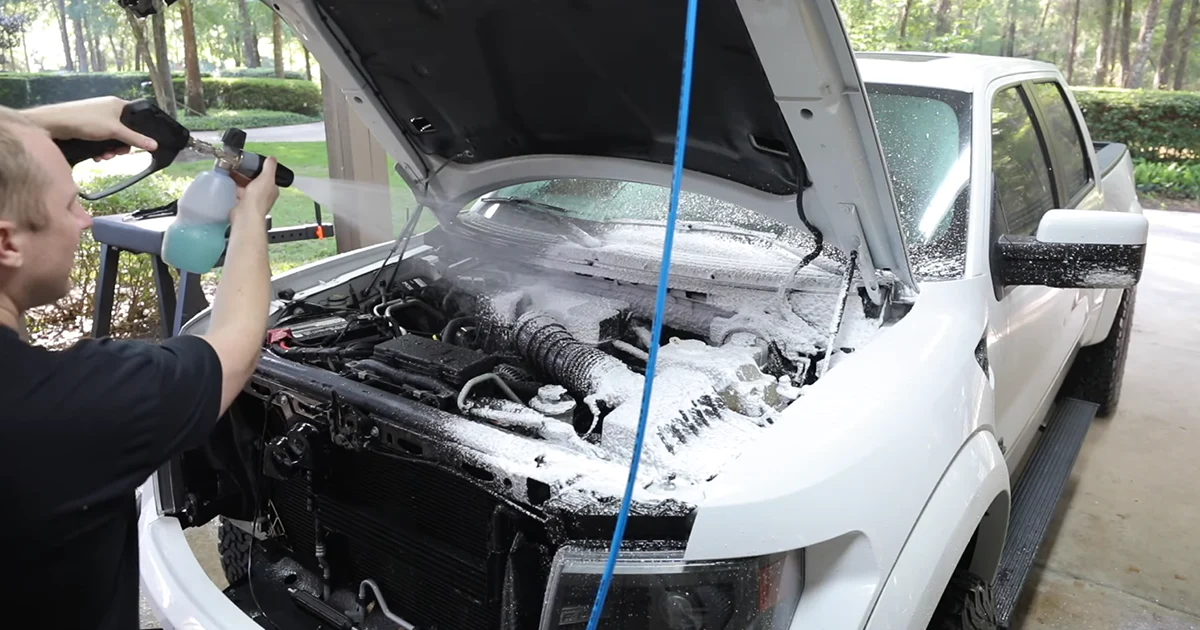
Before starting the cleaning process, make sure the engine has fully cooled; check how long to let the engine cool if you’re unsure, since spraying degreaser on a hot engine is a safety hazard. It’s also important to remove any loose items from the engine bay, such as leaves, twigs, or any other debris. You should also cover sensitive parts such as the air intake, battery terminals, and fuse box with a plastic bag, so they don’t get wet. Use a specialized engine degreaser spray on the engine bay. The degreaser helps to break down any grease, oil, or grime that has accumulated on the engine over time.
Step 2: How to Clean the Engine Bay with Water and Soap
Once the degreaser has been applied, let it sit for a few minutes to work its magic. Then, use a pressure washer or a garden hose to rinse off the engine bay thoroughly. It’s important to avoid using high-pressure water on electrical parts or sensitive areas, so be careful not to spray directly on them. After rinsing, use a bucket of warm water and soap and a microfiber towel to gently scrub the engine bay, the same way you’d approach washing your car’s exterior. Pay special attention to any stubborn dirt and grime that may have accumulated in hard-to-reach areas.
Step 3: Degreasing During Engine Bay Cleaning
After cleaning the engine bay thoroughly, apply a specialized engine degreaser on the surface and let it sit for about 10-15 minutes. Use a nylon brush to scrub off any remaining dirt, grease, or grime. Be careful not to scrub too hard on plastic surfaces, as they can easily get scratched. Rinse off the engine bay again to ensure all the dirt and degreaser have been removed properly.
Step 4: Drying
After washing and degreasing, dry the engine bay using a clean microfiber towel. Make sure you remove all the excess water both on the surface of the engine bay and in the tight corners of the engine compartment. Use a blower or compressed air to clean out any remaining water that may have collected in these hard-to-reach areas.
Step 5: Finishing
Once the engine bay is thoroughly dry, apply a specialized plastic or rubber dressing to the plastic and rubber parts of the engine bay. This step helps to restore the luster and adds a protective layer that makes it easier to clean in the future.
For exterior cleaning, you might also want to explore how a touchless car wash works and whether it’s safe for your paint.
Conclusion
Now that you know how to clean engine bay surfaces the right way, you can keep your car looking great while also protecting your engine from damage. With these simple steps, you can easily wash and degrease your engine bay in under an hour.
Regular engine bay cleaning, along with other car maintenance tasks from our car maintenance checklist, will help keep your car running smoothly and prevent any potential issues from arising. Happy cleaning!
Frequently Asked Questions
Is it safe to spray water on an engine bay?
Yes, as long as you avoid high-pressure water directly on electrical components like the alternator, battery terminals, and fuse box, and let the engine cool down first.
How often should you clean your engine bay?
Every 3 to 6 months is a reasonable schedule for most drivers, or more often if you drive in dusty, muddy, or salty conditions that lead to buildup faster.
Can cleaning the engine bay cause damage?
It can, if you use high-pressure water directly on sensors or electrical connectors, or scrub hard on plastic components. Covering sensitive parts and using gentle pressure avoids this.
Do you need a special degreaser for an engine bay?
A degreaser formulated for engines is recommended since it’s designed to cut through oil and grime without damaging rubber hoses, plastic covers, or painted surfaces.