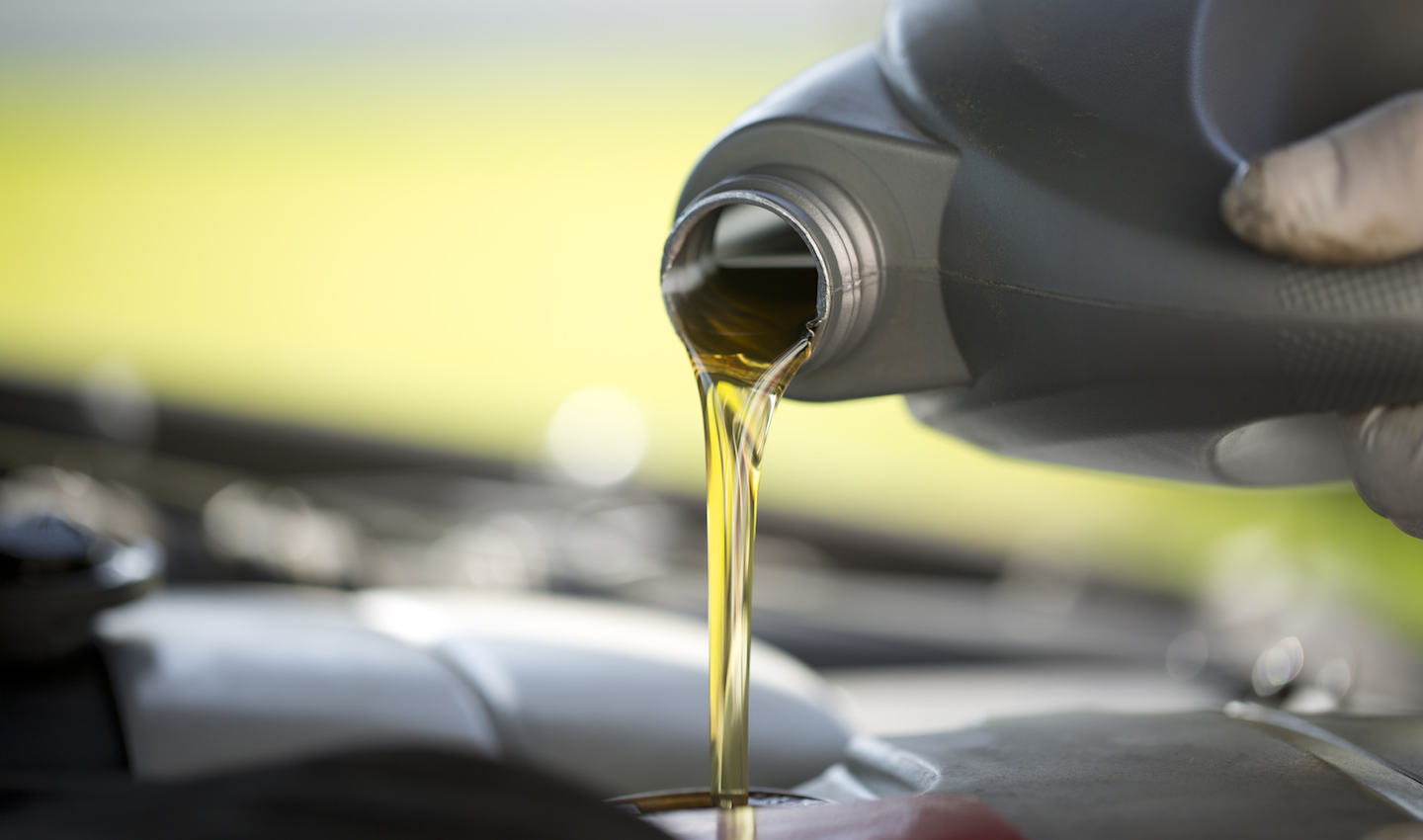
It is important to keep track of the oil levels in our vehicles regularly and maintain them accordingly. A common problem that many people face is that their vehicle’s engine oil level rapidly decreases without any noticeable leakage or burning. This raises the question: why is an engine consuming too much engine oil even when there are no visible signs? It is essential to investigate and correct the underlying issue as soon as possible to avoid serious engine damage later on. In some cases, you may also notice warning signs like a flashing oil light — here’s what it means.
This post covers how much oil consumption is actually normal, the leading causes when it’s not, and what steps you should take to address the issue.
How Much Oil Consumption Is Actually Normal?
Before assuming something’s wrong, it’s worth knowing that all engines burn a small amount of oil during normal operation, and many manufacturers consider a certain amount of consumption completely acceptable. As a rough guideline, many automakers treat up to about 1 quart per 1,000 to 2,000 miles as normal, especially in turbocharged or high-performance engines, though this varies by make and model. Check your owner’s manual for your specific vehicle’s guidance, since some manufacturers publish an exact acceptable rate.
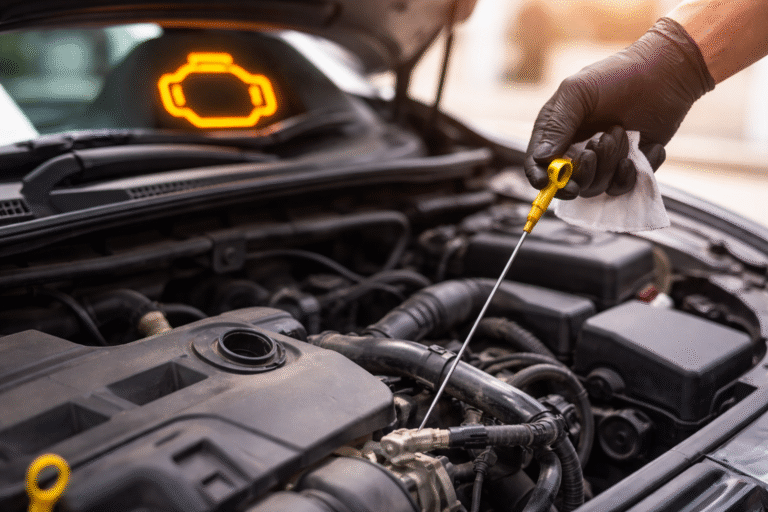
To get a real number for your car, start from a fresh oil change with the level at “full,” then check your dipstick every few hundred miles over a 1,000 to 2,000-mile stretch, topping off and recording how much you add. That gives you an actual consumption rate to compare against your manufacturer’s spec, rather than guessing.
On the “no visible signs” question: oil that’s being burned through worn rings or valve seals usually does produce some blue-tinted exhaust smoke, it’s just not always obvious. Smoke on startup or when decelerating tends to point toward worn valve seals, while smoke that shows up more under acceleration or load tends to point toward worn piston rings. If you genuinely see no smoke and no puddles under the car, but oil is still disappearing, it’s often a slow external leak (like a seeping valve cover gasket) that evaporates off a hot engine before it ever hits the ground.
1. Worn Piston Rings
Piston rings are designed to create a seal between the pistons and the cylinder walls, preventing oil from seeping into combustion chambers and increasing oil consumption. If these rings wear down over time or break, engine oil will pass through into the combustion chamber, causing increased oil consumption, typically accompanied by blue exhaust smoke under acceleration.
2. Valve Seal Damage
Valve seals are located at the top of the engine valves and keep oil from seeping into the combustion chamber via the valve stems. When these seals fail, oil leaks into the cylinders, leading to excessive consumption, often with blue smoke at startup or when coasting. If you’re interested in learning more about engine components like valve seals, pistons, cylinders, and the combustion chamber, check out this detailed guide.
3. A Clogged PCV Valve
The Positive Crankcase Ventilation (PCV) valve regulates engine pressure by removing harmful gases from the crankcase and directing them back into the intake manifold. A clogged or stuck PCV valve can cause excess crankcase pressure and pull oil vapor into the intake, where it gets burned, increasing oil consumption.
4. Worn Turbocharger Seals
If your engine is turbocharged, the turbo itself is worth checking. Turbos rely on oil for lubrication and cooling, and they’re sealed to keep that oil from getting into the intake or exhaust side. As those seals wear, oil can get drawn into the intake and burned along with the air-fuel mixture, or pushed out the exhaust side. This is an increasingly common cause of oil consumption given how many modern engines are turbocharged, and it’s often accompanied by a puff of blue-gray smoke on startup or hard acceleration.
5. Overfilling the Engine
Adding too much oil to the engine can cause oil foaming and excessive oil consumption, as well as damage key engine components. Always verify the recommended oil fill capacity to avoid this issue.
6. Worn Engine Bearings
Engine bearings are responsible for maintaining oil pressure and allowing the engine to rotate smoothly. Over time, bearings may wear down, which can cause the engine to consume more oil than usual and is often a sign of broader engine wear.
Conclusion
Maintaining adequate engine oil levels is crucial for the health and longevity of your vehicle’s engine. Some oil consumption is normal, especially in turbocharged engines, but if you notice your engine using more than your manufacturer’s guideline, it’s essential to catch the issue early and resolve it promptly to prevent severe damage.
By understanding what’s normal and the leading causes of excessive consumption, whether that’s worn rings, valve seals, a clogged PCV valve, worn turbo seals, overfilling, or worn bearings, you’ll be equipped to diagnose the problem and take the proper corrective action to keep your engine running smoothly.
Frequently Asked Questions
Many manufacturers consider up to about 1 quart per 1,000 to 2,000 miles normal, especially for turbocharged or high-performance engines, though this varies by make and model. Check your owner’s manual for your vehicle’s specific guidance.
It’s often a slow external leak, like a seeping valve cover gasket, that evaporates off a hot engine before it hits the ground. Internal burning through worn rings or valve seals usually does produce some smoke, even if it’s subtle.
Blue-tinted exhaust smoke is the classic sign of oil burning. Smoke at startup or when decelerating tends to point toward worn valve seals, while smoke under acceleration tends to point toward worn piston rings.
Yes. Worn turbo seals can let oil get drawn into the intake or pushed out the exhaust side, where it gets burned. This is an increasingly common cause given how many modern engines are turbocharged.
Start from a fresh oil change at the “full” mark, then track how much you add over 1,000 to 2,000 miles. Compare that rate to your manufacturer’s guideline rather than guessing based on how the oil level looks.