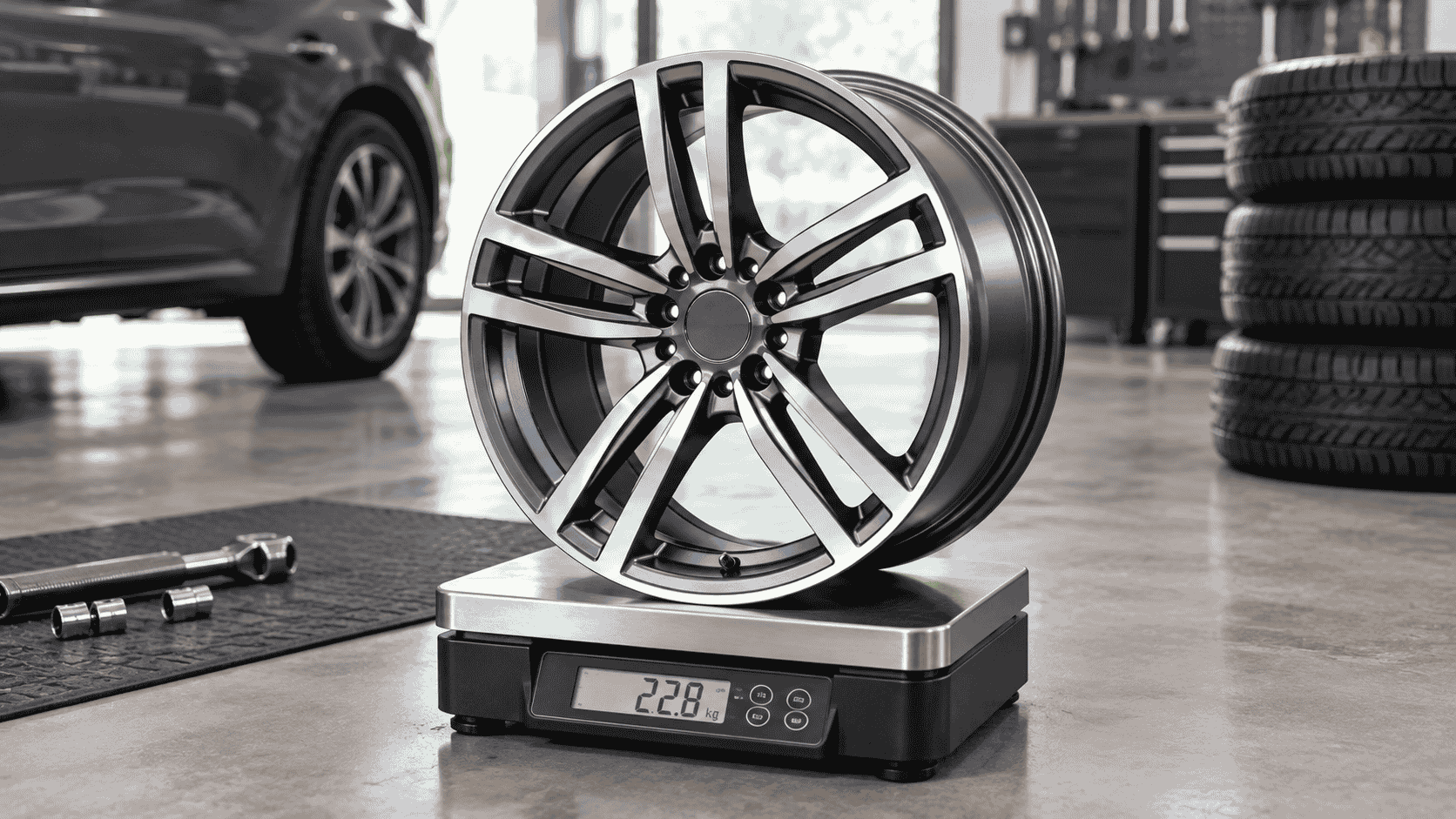
Whether you’re comparing wheel options before an upgrade, calculating unsprung weight for a performance build, or just curious what’s bolted to each corner of your car, the number varies more than you’d expect. So how much does an 18 inch alloy wheel weigh? Most 18-inch alloy wheels weigh between 20 and 26 pounds each, though the exact figure depends heavily on whether the wheel is cast or forged and how wide it is.
How Much Does an 18 Inch Alloy Wheel Weigh by Construction Type
Wheel weight varies significantly based on how it’s manufactured, not just its diameter. Here’s the general breakdown for an 18-inch alloy wheel:
- Cast aluminum (most factory OEM wheels): roughly 20 to 26 pounds
- Extruded aluminum: roughly 18 to 22 pounds
- Forged aluminum (common on performance and aftermarket wheels): roughly 15 to 20 pounds
Casting is the most common and least expensive manufacturing method, which is why the vast majority of factory wheels use it, but it also produces the heaviest wheels of the three types for a given size. Forging compresses the aluminum under extreme pressure, aligning its internal grain structure for greater strength at less material, which is why forged wheels can shed several pounds compared to a cast wheel of the same diameter and width.
Wheel Weight Plus Tire Weight
The wheel alone is only part of the picture. A typical 18-inch tire adds another 20 to 26 pounds depending on its width and construction, meaning a fully mounted 18-inch wheel and tire assembly commonly lands somewhere between 40 and 52 pounds total. That combined weight matters more than the wheel alone for most practical purposes, since it’s what you’re actually lifting, balancing, and accelerating at each corner of the car.
Why Wheel Weight Matters
Wheel weight isn’t just a shipping or lifting consideration, it’s unsprung weight, meaning it’s mass that isn’t supported by the car’s springs. Reducing unsprung weight, by switching from heavier cast wheels to lighter forged ones, for example, can noticeably improve a car’s ride quality, handling response, and acceleration, since the suspension has less mass to control over bumps and the drivetrain has less rotating mass to spin up. This is also why many performance-focused buyers pay a premium for forged wheels over otherwise similar cast alternatives.
If you’re considering a wider wheel and tire combination as part of an upgrade, it’s worth reading about whether you can use 225 tires instead of 215 first, since a wider tire adds weight on top of any change in the wheel itself.
Checking and Maintaining Your Wheels
Whatever wheels you’re running, proper installation matters as much as the wheel’s weight. Make sure lug nuts are torqued to your vehicle’s specification, similar to the process covered in our lug nut torque spec guide, in the correct star pattern, and re-checked after the first 50 to 100 miles on newly installed wheels. It’s also worth keeping tire pressure at the recommended spec listed on your door jamb sticker, knowing how to let air out of a tire if you ever need to bring an overinflated tire back down to that number, and staying on top of regular tire rotations to keep wear even across all four corners.
Conclusion
So, how much does an 18 inch alloy wheel weigh? Most cast alloy wheels fall between 20 and 26 pounds, while forged wheels can drop to 15 to 20 pounds for the same diameter. Add the tire and you’re looking at roughly 40 to 52 pounds per corner fully mounted. If ride quality and handling matter to you, that weight difference between cast and forged construction is worth considering before you buy, the same way it’s worth knowing how much other rotating and reciprocating components weigh, whether that’s an automatic transmission or a 5.7 Hemi engine.
Frequently Asked Questions
Do wider 18-inch wheels weigh more than narrower ones?
Yes, width adds weight even at the same 18-inch diameter. A wider wheel uses more material across its barrel and spokes, so two 18-inch wheels of different widths can differ by several pounds even from the same manufacturer.
Is it worth paying more for forged wheels to save weight?
For performance driving or track use, many owners find the improved handling and acceleration response worth the added cost. For purely daily-driven cars, the difference is noticeable but less critical than for cars regularly pushed hard.
Do heavier wheels affect fuel economy?
Slightly. Heavier wheels increase rotating mass, which takes marginally more energy to accelerate, though the real-world fuel economy difference from wheel weight alone is generally small compared to other factors like tire choice and driving habits.
How much does a full set of four 18-inch wheels and tires weigh?
Based on the roughly 40 to 52 pound per-corner figure for a mounted wheel and tire, a full set of four typically totals somewhere between 160 and 210 pounds, depending on wheel construction and tire size.