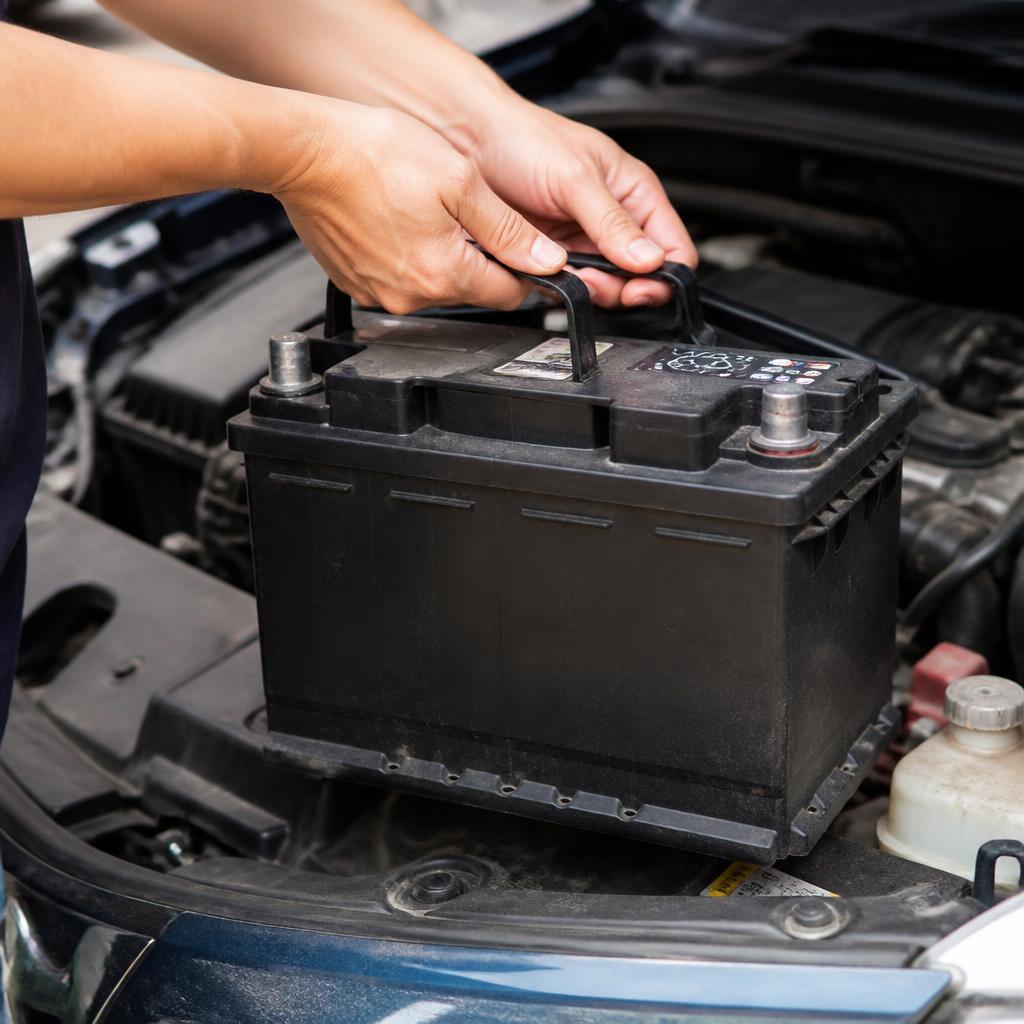
How much does a car battery weigh? Most standard 12-volt car batteries weigh about 30 to 50 pounds. Smaller batteries for compact cars can come in around 25 to 35 pounds, while large batteries for trucks, SUVs, and vehicles with heavy electrical demands often weigh 50 to 60 pounds. AGM batteries usually weigh a little more than conventional flooded batteries of the same size, while lithium batteries weigh far less.
Why Car Batteries Are So Heavy
Nearly all gas and diesel cars use lead-acid starter batteries. Lead is very dense, and a battery is packed with lead plates submerged in an electrolyte of sulfuric acid and water. More plates mean more cranking power and reserve capacity, but also more weight. That’s why a bigger battery with a higher cold cranking amp (CCA) rating almost always weighs more.
Battery Weight by Type
| Battery Type | Typical Weight |
|---|---|
| Small car battery (compact group sizes) | 25–35 lb |
| Standard car battery | 30–50 lb |
| Large truck/SUV battery | 50–60 lb |
| AGM battery | Slightly heavier than flooded of same size |
| Lithium 12V battery | Often under 20 lb |
Group size affects weight, too. For example, a Group 24F is physically larger than a Group 35 and usually a few pounds heavier. If you’re comparing those two sizes, see whether you can use a group 24F battery instead of 35.
Does a Heavier Battery Mean a Better Battery?
Not automatically. Within the same brand and line, a heavier battery usually has more lead and more cranking power. But what really matters is that the battery is the correct group size for your tray and meets or exceeds the CCA your owner’s manual specifies. A worn-out battery may also weigh about the same as a new one, so weight tells you nothing about its health. If your battery keeps going flat, it may be the charging system, so check whether your alternator is bad.
Handling a Car Battery Safely
- Lift with your legs and keep the battery upright to avoid spilling acid.
- Use the carrying handle or a battery strap if one is available.
- Wear gloves and eye protection, since battery acid is corrosive.
- Disconnect the negative terminal first and reconnect it last.
- Recycle the old battery. Most parts stores accept them, and many charge a core fee that’s refunded when you return the old one.
If your current battery won’t start the car at all, our guide on whether a car battery can be too dead to jump start can help before you replace it.
Conclusion
So, how much does a car battery weigh? Most weigh 30 to 50 pounds, with small batteries closer to 25 pounds and large truck batteries around 50 to 60 pounds. Lead-acid construction is what makes them so heavy. Lithium batteries are much lighter but far less common in everyday cars. Handle them carefully, and add a battery check to your car maintenance checklist.
Frequently Asked Questions
How much does an AGM car battery weigh?
AGM batteries usually weigh about the same as or slightly more than a flooded battery of the same group size, commonly in the 35 to 60 pound range.
Does a dead battery weigh less than a charged one?
Not noticeably. The chemical changes during discharge don’t change the battery’s weight in any way you could feel, so weight can’t tell you whether a battery is charged.
How much does an electric car battery weigh?
The high-voltage battery pack in an EV is far heavier than a starter battery, often around 1,000 pounds or more depending on the vehicle. Most EVs also still carry a small 12-volt battery.
Can I carry a car battery by myself?
Most people can, since standard batteries weigh 30 to 50 pounds, but lift carefully, keep it upright, and use a strap or handle to avoid back strain or spilling acid.