Coolant is a vital component of every car’s engine cooling system, and it’s essential to make sure it’s functioning properly at all times. G12 coolant is a type of antifreeze, sometimes confused with antifreeze in general, that has become increasingly common among car owners and mechanics, especially on Volkswagen Group vehicles.
In this article, we’ll explore what G12 coolant is, why it’s important for your car, and one critical thing to know before you ever add or switch coolant types. As part of routine car maintenance, checking coolant condition and type is essential.
What is G12 Coolant?
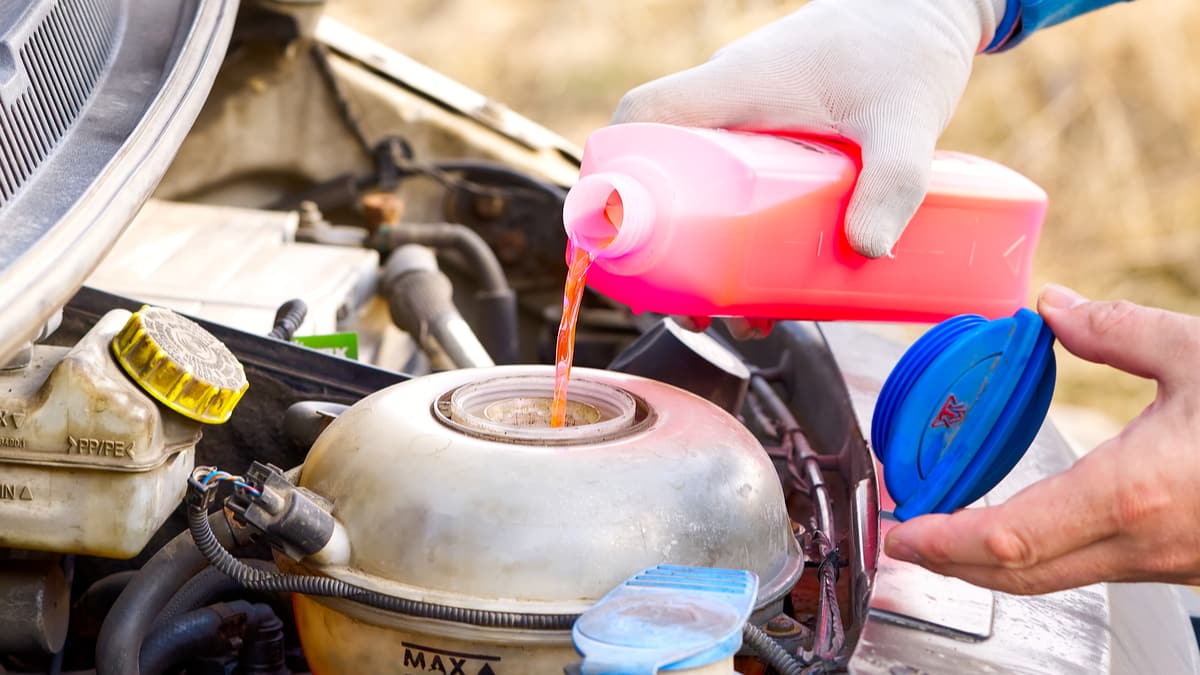
G12 coolant was first introduced by Volkswagen Group and refers to its organic acid technology (OAT) formula, typically pink or violet in color. What makes G12 different from traditional coolants is that it uses organic acid technology rather than the older inorganic corrosion inhibitors (sometimes called IAT, found in traditional green coolant). This organic acid formulation is generally less abrasive and longer-lasting than older coolant types. If you want a detailed technical breakdown, you can read this Volkswagen G12 coolant explanation.
It’s also worth knowing that “G12” isn’t one single unchanging formula. Volkswagen has used several generations over the years, including G11, G12, G12+, G12++, and now G13, and they aren’t all interchangeable with each other. Color alone isn’t a reliable way to tell them apart either, so it’s worth checking your owner’s manual or the exact product specification for your vehicle rather than assuming any pink or purple coolant is the right one.
Coolant is responsible for keeping your car’s engine from overheating. It works by circulating through the engine and absorbing heat from the engine components. Over time, coolant can break down, lose its effectiveness, and become contaminated, which can lead to overheating and significant engine damage. G12 coolant helps protect your engine from overheating and provides long-lasting corrosion protection, which matters especially in modern engines with many aluminum components that are vulnerable to corrosion.
Important: Don’t Mix G12 With Conventional Coolant
This is the single most important thing to know about G12 coolant: it should not be mixed with conventional (IAT-type, typically green) coolant, or with an incompatible G-series generation, without a complete flush of the system first. Mixing OAT-based coolant like G12 with conventional coolant can cause the two to react and form a thick, sludgy gel that clogs the radiator, heater core, and coolant passages throughout the engine, leading to overheating and, in serious cases, requiring the cooling system (or even the engine) to be disassembled and cleaned out. If you’re topping off or switching coolant types, always confirm compatibility first, and when in doubt, do a full coolant flush rather than topping off with something different.
When to Flush or Refill Your Coolant
Most manufacturers recommend replacing coolant every 30,000 to 50,000 miles or every 3 to 5 years, whichever comes first, though this varies by vehicle and coolant type, so check your owner’s manual for your specific schedule. Another sign it’s time for a flush is discolored coolant; it should be a clear, bright pink or violet, and if it turns brown, rust-colored, or cloudy, that’s a sign it’s degraded or possibly contaminated.
G12 coolant is also generally non-toxic in its concentrated formulations compared to some older coolants, biodegradable, and rated to maintain effectiveness across a wide temperature range in a properly pressurized cooling system. Just remember that none of these benefits change the mixing rule above; even a coolant with a great safety and performance profile on its own can cause real damage if combined with an incompatible type.
Conclusion
G12 coolant is a vital component in your car’s engine cooling system, valued for being less abrasive, longer-lasting, and offering strong corrosion protection for modern, aluminum-heavy engines. But its biggest catch is compatibility: never mix it with conventional coolant or an incompatible G-series generation without a full flush, since doing so risks gelling and clogging your cooling system entirely.
To keep your engine protected, follow your manufacturer’s recommended coolant type and replacement schedule, watch for discoloration, and when switching coolant types, flush the system completely rather than just topping it off.
Frequently Asked Questions
Can I mix G12 coolant with regular green coolant?
No. Mixing OAT-based coolant like G12 with conventional (IAT-type) green coolant can cause the mixture to gel and clog the radiator, heater core, and coolant passages. Always flush the system completely before switching coolant types.
Are G11, G12, G12+, G12++, and G13 all the same thing?
No. These are different generations of Volkswagen coolant with different formulations and compatibility. Color alone isn’t a reliable way to tell them apart; check your owner’s manual or the exact product specification for your vehicle.
What happens if I accidentally mix incompatible coolants?
The mixture can turn into a thick, sludgy gel that clogs cooling system passages, leading to overheating. If this happens, the system typically needs a thorough flush, and in severe cases, disassembly to clear the clogged passages.
How do I know if my coolant needs to be flushed?
Follow your manufacturer’s recommended interval, typically 30,000 to 50,000 miles or 3 to 5 years, and watch for discoloration. Coolant that’s turned brown, rusty, or cloudy instead of its normal bright color has likely degraded or become contaminated.
Is it safe to just top off G12 coolant with whatever is on hand?
No. Topping off with an incompatible coolant type is exactly the scenario that causes gelling and clogging. Only top off with the exact type specified for your vehicle, and if you’re unsure, have a shop verify what’s currently in your system first.