The oil light flicks on, or maybe you just noticed the dipstick reading lower than it should be. So how long can you drive with low oil before it actually hurts the engine? The honest answer is: not far, and not for long. Oil is what keeps metal engine components from grinding against each other, and once the level drops too low, that protection starts to fail within minutes of driving, not hours.
How Long Can You Drive With Low Oil? It Depends on How Low
If your oil level is just slightly below the full mark on the dipstick but still within the safe range, you can generally keep driving normally until your next scheduled oil change. That’s not what this question is usually about, though. If the oil light on your dashboard has come on, or the dipstick shows the level near or below the low mark, treat it as urgent: get to a gas station or auto parts store to top off as soon as possible, ideally within a few miles, and avoid hard acceleration or high RPMs in the meantime.
If the oil light stays on after you’ve added oil, or you’re not sure how low the level actually is, the safest move is to stop driving and have the car looked at rather than pushing on and hoping for the best. An engine that’s truly run dry, or close to it, can suffer serious, irreversible damage in as little as a few minutes of continued driving.
What Actually Happens Inside a Low-Oil Engine
Engine oil does more than lubricate; it also carries heat away from the crankshaft bearings, camshaft, and other high-friction internal parts. When the level drops too low, oil pressure falls, and the thin film of oil that’s supposed to separate moving metal parts starts to break down. The result is metal-on-metal contact at extremely high speed, which generates heat fast enough to score bearings, scuff cylinder walls, and in severe cases seize the engine entirely, turning it into scrap metal rather than something a shop can repair.
Warning Signs You’re Running Low on Oil
The oil warning light is the most obvious sign, and it’s worth understanding what makes a car’s oil light flash rather than assuming it’s a false alarm. Beyond the dashboard light, listen for a ticking or knocking noise from the engine, which often means oil pressure has dropped enough that parts aren’t being properly lubricated. A burning oil smell, visible smoke from the exhaust, or the engine running noticeably hotter than usual are also signs worth taking seriously.
What to Do If You’re Low on Oil Right Now
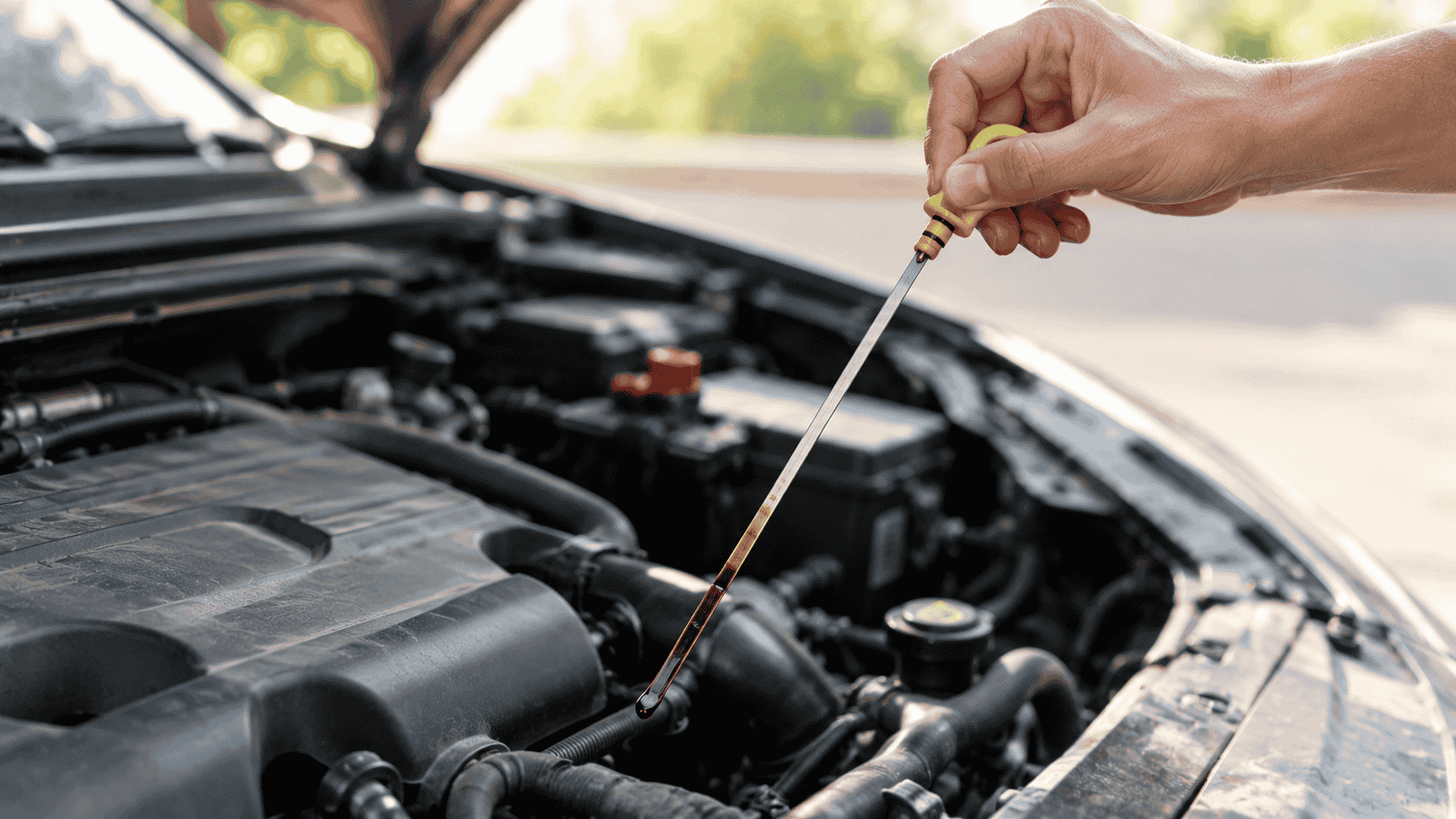
Pull over as soon as it’s safe to do so and check the dipstick. If you’re low, add oil of the correct type and weight for your engine, a little at a time, rechecking the dipstick between additions rather than guessing. Let the engine cool first if it’s been running, since checking a hot engine’s level can give an inaccurate reading, and it’s worth knowing how long to let the engine cool before adding oil so you don’t burn yourself in the process. If you don’t have oil on hand and the light is on, drive gently and minimally to the nearest station rather than continuing your normal trip.
Why Oil Runs Low in the First Place
A properly maintained engine shouldn’t burn through oil quickly between changes, so a sudden drop usually points to something worth investigating: an external leak from a worn gasket or seal, or the engine consuming too much oil internally past worn piston rings or valve seals. Staying on top of regular oil and filter changes is the best way to catch a slow leak or unusual consumption before it becomes a low-oil emergency, and it’s exactly the kind of item that belongs on a car maintenance checklist rather than something you only think about when the light comes on.
Conclusion
So, how long can you drive with low oil? If the level is only slightly low, you have some room, but if the warning light is on or the dipstick shows a level near empty, treat it as an emergency, not a someday task. Get oil added or the car looked at as soon as possible; a few minutes of driving on severely low oil can cause damage that costs far more than the oil itself ever would.
Frequently Asked Questions
Can driving with low oil ruin an engine permanently?
Yes, if the level gets low enough for long enough. Severe oil starvation can score bearings, scuff cylinder walls, or seize the engine entirely, damage that typically requires a full engine replacement rather than a repair.
Is it safe to drive a short distance with the oil light on?
A very short, gentle drive to the nearest station to add oil is generally the best option if you have no other choice, but avoid highway speeds, hard acceleration, and anything longer than necessary.
How much oil loss is considered dangerously low?
Once the dipstick reads at or below the low mark, or the oil warning light activates, treat it as dangerously low. Modern engines are designed with little margin once that point is reached.
Why does my car burn oil between changes even though there’s no visible leak?
This is usually internal consumption, oil seeping past worn piston rings or valve seals and burning off in the combustion chamber, which is common in higher-mileage engines and won’t necessarily show up as a puddle under the car.